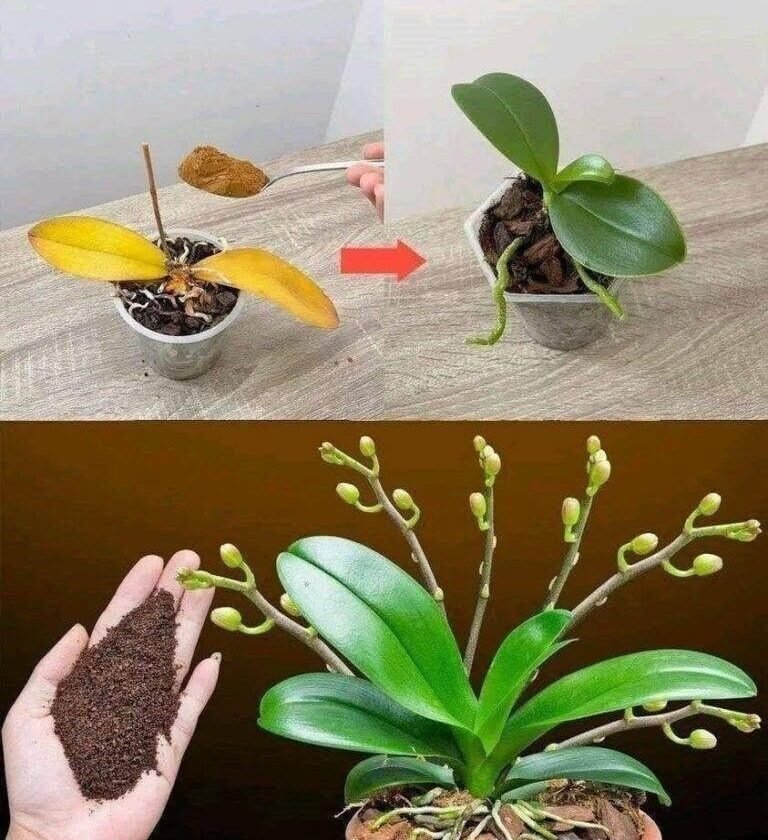
If you’re referring to the viral “one teaspoon makes an orchid suddenly bloom” gardening claim, be skeptical. There isn’t a magic teaspoon of household ingredient that reliably makes orchids produce lots of flowers.
For an orchid such as Phalaenopsis, flowering is much more dependent on light, temperature, watering, nutrition, and the plant’s natural growth cycle.
🌸 What actually helps an orchid bloom
- Bright, indirect light: Insufficient light is one of the most common reasons an otherwise healthy orchid doesn’t flower.
- Proper watering: Water thoroughly when the potting medium is approaching dryness, then allow excess water to drain completely. Don’t let the roots sit in stagnant water.
- Appropriate fertilizer: During active growth, use a balanced orchid fertilizer at the label’s recommended dilution rather than homemade “miracle” mixtures.
- A temperature change: Mature Phalaenopsis orchids can be encouraged to initiate flower spikes by experiencing somewhat cooler nighttime temperatures for several weeks.
- Patience: Once a flower spike develops, it can take weeks or months before the flowers open.
⚠️ Avoid kitchen “hacks”
Don’t routinely pour vinegar, baking soda, sugar, milk, hydrogen peroxide, or other concentrated household ingredients into orchid pots. They can alter the growing medium or damage roots without providing a reliable flowering benefit.
If your orchid has healthy green leaves and roots but hasn’t bloomed, the first thing I’d check is how much light it receives. A healthy orchid that isn’t flowering is often getting insufficient light rather than lacking a secret fertilizer.