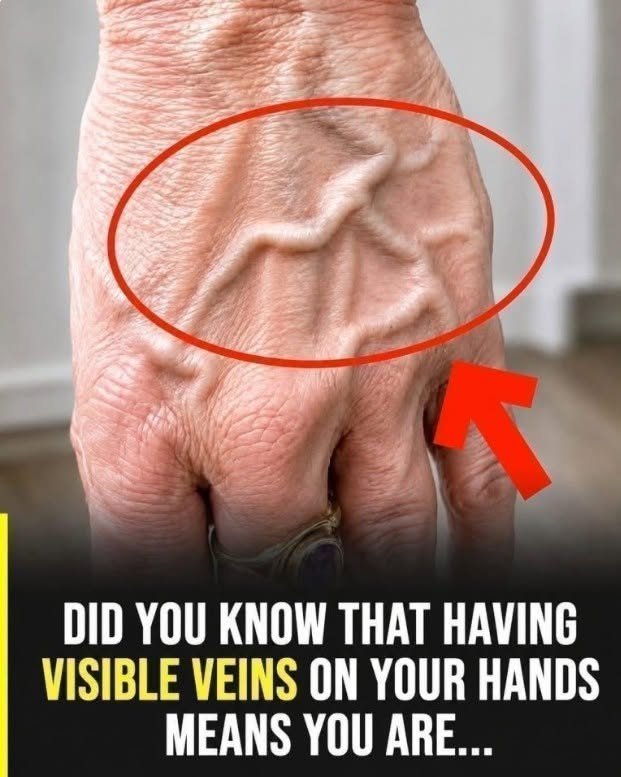
Why Hand Veins Look More Prominent
-
Heat and physical exertion: Warm weather or exercise increases blood flow and widens blood vessels near the skin to release body heat, making veins stand out more.
-
Gravity and arm position: Letting your hands hang at your sides or resting your arm below heart level lets blood pool slightly in the veins of the hand and forearm.
-
Low body fat or thin/aging skin: Having less subcutaneous fat over the hands—or natural skin thinning and loss of elasticity with age—makes underlying veins much easier to see.
-
Genetics and lean/athletic build: Some people simply inherit larger superficial veins or thinner skin, and strength training or regular movement temporarily boosts blood flow and muscle pump.
-
Mild dehydration or blood pressure shifts: Temporary shifts in fluid balance or blood vessel tone can change how noticeably veins appear from day to day.
When It Actually Makes Sense to Get Checked
| What You Notice | Why It Warrants a Look |
| Sudden swelling, warmth, redness, or aching in one arm or hand | Helps rule out localized inflammation or a blood clot (such as upper-extremity deep vein thrombosis) |
| Hard, tender, cord-like vein or skin changes | Worth examining to distinguish superficial phlebitis or localized irritation from normal anatomy |
| Chest pressure, shortness of breath, or persistent neck/chest vein distension | Needs prompt medical evaluation to check heart or central venous pressure |