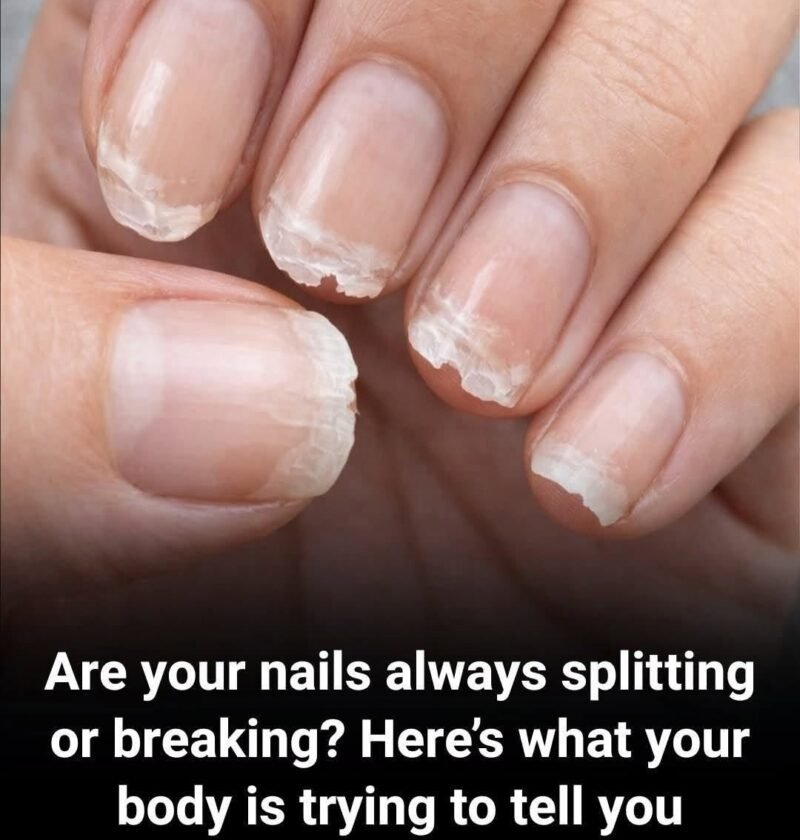
Weak or Brittle Nails: What Your Body Is Trying to Tell You
Have you noticed your nails splitting, peeling, breaking easily, or developing ridges? Your nails can sometimes offer clues about your health—but brittle nails do not automatically mean you have a vitamin deficiency or serious illness.
As we age, nails often become more fragile. Frequent handwashing, cleaning products, repeated exposure to water, and normal aging are common causes.
Here are eight possible explanations worth knowing.
1. Iron deficiency
Iron deficiency can sometimes contribute to brittle nails. In more advanced cases, nails may become unusually thin or spoon-shaped, with the edges curving upward.
Other possible symptoms include:
-
Fatigue and weakness.
-
Pale skin.
-
Dizziness or headaches.
-
Shortness of breath during activity.
A blood test can check for anemia and help identify iron deficiency. Do not start iron supplements without appropriate medical advice, because excess iron can be harmful.
2. Not getting enough nutrients
Your body needs adequate protein, vitamins, and minerals to maintain healthy nails.
A restrictive diet or poor nutrient absorption may contribute to nail changes. However, brittle nails alone cannot identify which nutrient, if any, is lacking.
Try to eat a balanced diet containing eggs, beans, lentils, fish, dairy products, nuts, vegetables, and other protein-rich foods appropriate for your needs.
3. Thyroid problems
Both an underactive thyroid and, less commonly, an overactive thyroid can be associated with changes in nail texture or growth.
An underactive thyroid may also cause:
-
Feeling unusually cold.
-
Constipation.
-
Dry skin and hair.
-
Fatigue or unexplained weight gain.
If nail changes occur alongside these symptoms, ask your healthcare professional whether thyroid testing is appropriate.
4. Frequent exposure to water and cleaning products
Repeatedly wetting and drying your hands can weaken the nail structure. Detergents, solvents, and harsh cleaning products can make the problem worse.
What can help:
-
Wear protective gloves when washing dishes or cleaning.
-
Apply a thick, fragrance-free moisturizer after washing your hands.
-
Use petroleum jelly or cuticle moisturizer around your nails.
-
Limit prolonged soaking and avoid picking at peeling nail layers.
5. Normal aging
Nails may become more brittle, develop ridges, or grow more slowly as you get older. Longitudinal ridges—lines running from the cuticle toward the tip—are often harmless.
However, sudden changes, significant discoloration, or abnormalities affecting just one nail deserve closer attention.
6. Nail polish and artificial nails
Frequent use of gel manicures, acrylic nails, acetone-based removers, and aggressive filing can damage the nail surface.
Give your nails a break from artificial enhancements if they are peeling or splitting. Avoid scraping off polish or forcibly removing artificial nails.
7. Skin conditions or fungal infections
Conditions such as psoriasis and eczema can affect the nails. Fungal infections may cause nails to become thickened, discolored, crumbly, or detached from the nail bed.
These problems can look similar, so a clinician may need to examine the nail or take a sample before recommending treatment. Not every yellow or brittle nail is caused by fungus.
8. Less commonly, another medical condition
Nail changes can occasionally accompany conditions affecting the body’s circulation or general health. But appearance alone is not a reliable way to diagnose heart disease, kidney disease, liver disease, or other internal illnesses.
Seek medical advice if the changes are persistent, unexplained, or accompanied by other symptoms.
Five simple habits for stronger nails
Apply hand cream after washing and a little petroleum jelly around the nails before bed.
Trim them regularly and file rough edges gently in one direction.
Include a range of protein sources and nutrient-rich foods rather than relying on a single supplement.
Wear gloves for prolonged wet work and when handling irritating cleaning products.
Fingernails grow slowly, so visible improvement may take several months. Avoid unnecessary supplements, harsh treatments, and repeated artificial manicures.
When should you see a doctor?
Arrange an appointment if your nails remain brittle despite basic care, or if you develop persistent pain, swelling, nail separation, unusual thickening, or significant color changes.
A new dark stripe in one nail—particularly if it widens, has irregular borders, or spreads onto the surrounding skin—should be examined promptly. Seek urgent care if redness and swelling develop rapidly with severe pain or pus.
One important question
What exactly is happening to your nails?
2. How long has this been happening?
3. Have you noticed other symptoms?
Help me understand my nail changes