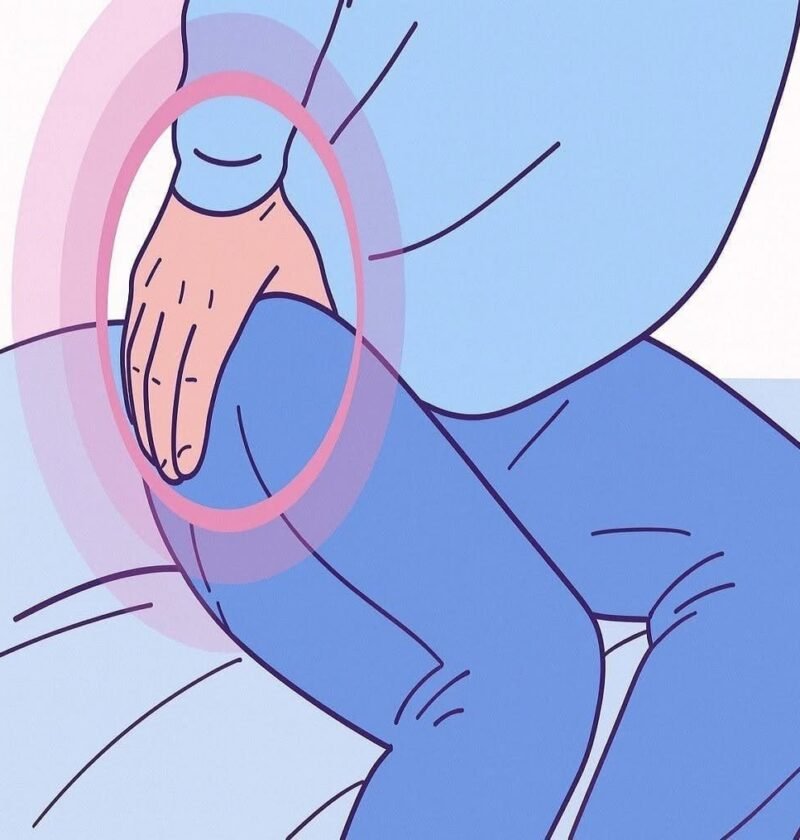
Ah, the ultimate orthopedic cliffhanger! When an internet health headline dangles a vague, ominous warning about hip pain behind a “See more” button, you can instantly spot the engagement-farming playbook at work.
By taking a very common, frustrating physical symptom and implying it’s a sign of some hidden ticking time bomb, these sites are engineering pure anxiety just to get your click.
Here is the realistic, un-dramatized reality of what hip pain actually means and why a blanket “clear sign” statement is total fiction:
What the Clickbait Wants You to Panic About
Articles like this usually try to terrify you with extreme scenarios:
-
“You need a total hip replacement tomorrow!” (Ignoring the fact that the vast majority of hip discomfort can be managed with conservative care.)
-
“It’s a secret symptom of a catastrophic systemic disease!” (Using a localized joint ache to push fear-based supplement sales.)
The Real (and Much More Boring) Causes of Hip Pain
Your hip is a massive, complex ball-and-socket joint supported by a dense network of tendons, muscles, bursae (fluid-filled sacs), and your lower spine. When your hip hurts, it’s rarely a mysterious crisis; it usually comes down to a few very common mechanical culprits:
-
Hip Bursitis:
-
What it is: Inflammation of the bursa sac on the outside of your hip bone.
-
Why it happens: Often triggered by repetitive motion, sudden increases in walking or running, or sleeping too long directly on your side. It causes a sharp, localized ache on the outer hip.
-
-
Tendinitis or Muscle Strain:
-
What it is: Overuse or minor tears in the tendons connecting your glutes or hip flexors to the bone.
-
Why it happens: Sitting for hours at a desk weakens your glute muscles, forcing your hip flexors to overcompensate and become chronically tight and strained.
-
-
Referred Pain from the Lower Back (Lumbar Spine):
-
What it is: This is a huge one! Often, people feel a deep ache in their hip or outer thigh, but the actual root cause is a pinched nerve or disc issue in the lower back. The nerve signals simply travel down the pathway, making you think your hip is the problem when it’s actually your spine.
-
-
Osteoarthritis:
-
What it is: Gradual wear and tear of the cartilage inside the ball-and-socket joint over time, leading to stiffness, deep groin discomfort, and reduced range of motion.
-
What Actually Helps Manage Hip Discomfort
If your hips are aching, skip the internet panic and focus on the fundamentals that physical therapists swear by:
-
Gentle Mobility, Not Rest: While you shouldn’t push through sharp pain, completely immobilizing a sore hip usually makes stiffness worse. Gentle, low-impact movement (like swimming, stationary cycling, or gentle walking) keeps synovial fluid lubricating the joint.
-
Targeted Strengthening: Strengthening your gluteus medius and core stabilizes the entire pelvic region, taking excess pressure off the hip joint capsule.
-
Professional Evaluation: If hip pain is sharp, constant, wakes you up at night, or limits your ability to walk, don’t guess based on a clickbait article. A physical therapist or doctor can pinpoint whether the issue is muscular, bursal, joint-based, or coming from your back.
💡 The Bottom Line: Hip pain isn’t a single “clear sign” of any one dramatic disaster—it’s just a mechanical signal from your body that a muscle, tendon, bursa, or joint is irritated, overworked, or lacking support.
Did this article try to sell you a miracle joint supplement powder, or was it pushing a weird “bedtime stretch” video?