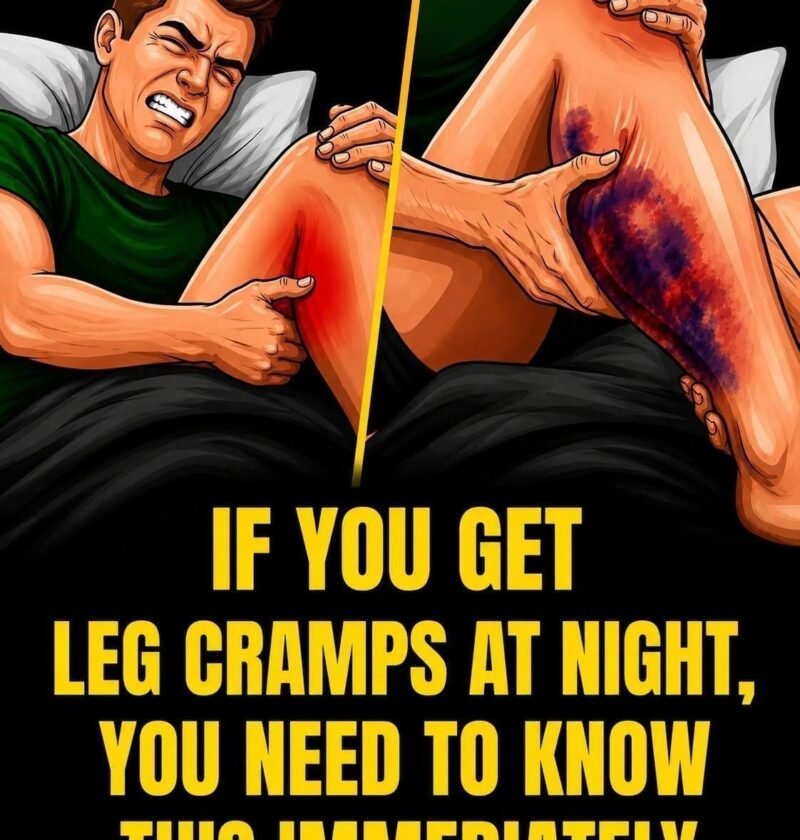
If You Get Leg Cramps at Night, You Need to Know This
Waking up with a sudden, painful tightening of your calf or foot can be frightening. Nighttime leg cramps are common, particularly in older adults, and they’re often harmless—but frequent or severe cramps deserve attention.
What should you do when a cramp strikes?
1. Gently stretch the affected muscle.
For a calf cramp, straighten your leg and gently pull your toes toward your face. Don’t force the stretch.
2. Massage the muscle.
Gently rub the cramped area until it begins to relax.
3. Stand up carefully.
If you’re able to do so safely, putting weight on the affected leg and taking a few gentle steps may help release the cramp.
4. Use warmth.
A warm shower or heating pad on a low setting can help relax the muscle. Protect your skin from burns.
Why do nighttime cramps happen?
Sometimes there is no obvious cause. Other possible contributors include:
Muscle overuse or prolonged activity
Dehydration
Sitting or standing for long periods
Pregnancy
Certain medications
Nerve or circulation problems
Some medical conditions
It’s a common misconception that every nighttime cramp means you’re deficient in potassium, magnesium, or calcium. Don’t automatically start high-dose supplements without determining the cause.
How can you reduce future cramps?
Stay adequately hydrated.
Stretch your calves gently before bed.
Avoid suddenly increasing strenuous exercise.
Keep physically active during the day.
Review medications with a healthcare professional if cramps started after a medication change.
🚨 When should you seek medical advice?
Talk to a healthcare professional if cramps are frequent, severe, worsening, disturbing your sleep regularly, or accompanied by muscle weakness, numbness, swelling, or persistent pain.
Seek urgent care for sudden swelling, warmth, redness, or significant pain in one leg, particularly if accompanied by chest pain or shortness of breath. Those symptoms can indicate a blood clot rather than an ordinary muscle cramp.
The key takeaway: Most nighttime leg cramps aren’t dangerous, but recurring cramps shouldn’t automatically be treated with supplements. First identify the likely cause and use gentle stretching, massage, and appropriate hydration to manage them.