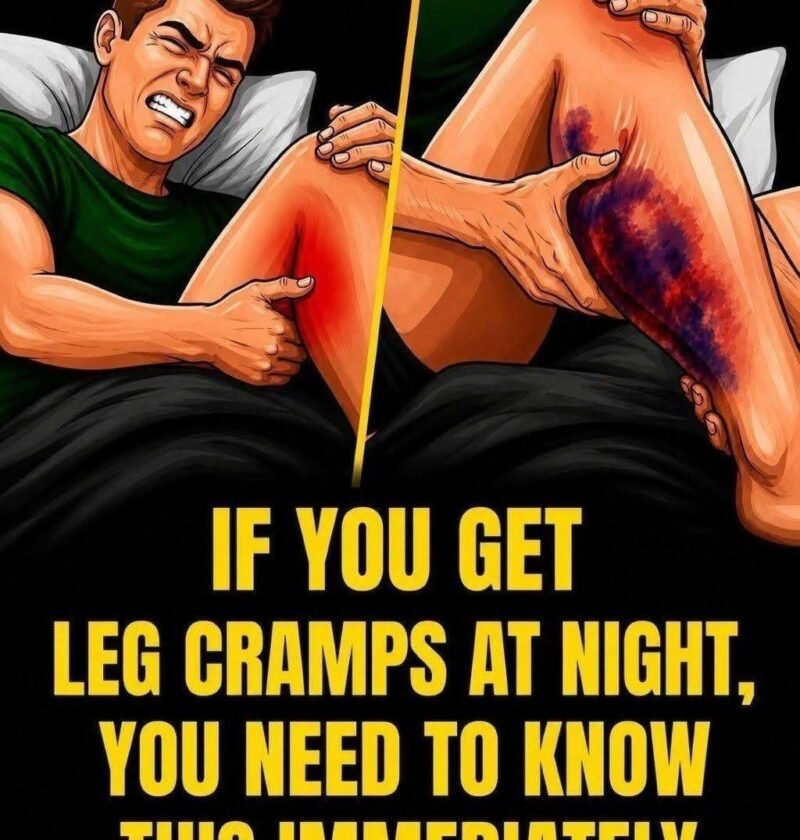
If you mean the common warning that nighttime leg cramps indicate a serious deficiency or disease, that’s not necessarily true. Night leg cramps are common, particularly in the calf, and often have no dangerous underlying cause.
What to do when a cramp happens
-
Gently stretch the cramped muscle. For a calf cramp, straighten your leg and pull your toes toward your face.
-
Stand up and put some weight on the leg if you’re able to do so safely.
-
Massage the muscle gently.
-
A warm shower or heating pad may help relax the muscle afterward.
Why do they happen?
Possible contributors include muscle fatigue, prolonged sitting or standing, dehydration, pregnancy, aging, and some medications. Electrolyte deficiencies can contribute in some circumstances, but automatically taking magnesium, potassium, or salt isn’t recommended unless there’s a reason to suspect a deficiency.
If cramps happen frequently, discuss them with a clinician—particularly if they started after beginning a medication such as a diuretic or statin, or if you have swelling, weakness, numbness, or persistent pain.
Get urgent medical attention if one leg suddenly becomes swollen, red, warm, and painful, especially with shortness of breath or chest pain, because that pattern can indicate a blood clot rather than an ordinary muscle cramp.