What Freezing Milk Actually Does
-
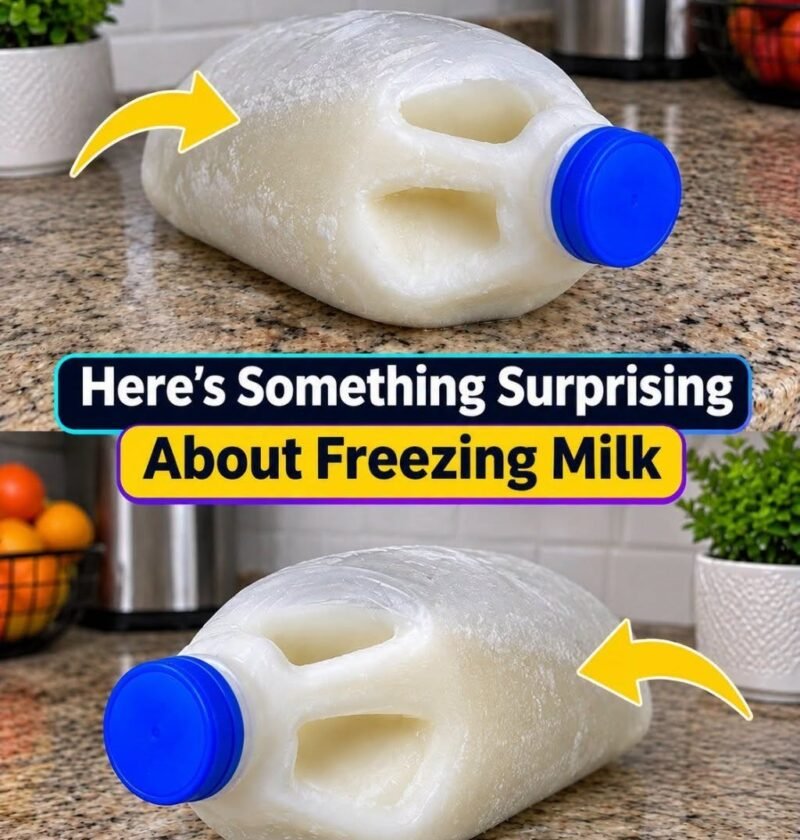
Storage life: Freezing fresh milk at 0°F (-18°C) keeps it safe for about 1 to 3 months with minimal quality loss (and up to 6 months if needed, though texture and flavor degrade more).
-
Texture changes: Once thawed, milk may look slightly separated or grainy. Shaking or whisking it—or blending it into smoothies, soups, or batters—restores a smooth consistency.
-
Best uses after thawing: Thawed milk works great in baking, pancakes, sauces, soups, oatmeal, and smoothies. Because the texture can be slightly less uniform for straight drinking or whipping, many cooks prefer thawed milk for cooking rather than pouring cold over cereal.
How to Freeze and Thaw Milk Properly
-
Leave headspace: Pour off a little milk or use a container with room to expand so the carton or bottle does not split as water freezes.
-
Freeze near the coldest spot: Keep the freezer around 0°F (-18°C) so it freezes quickly and forms smaller ice crystals.
-
Thaw in the refrigerator: Move frozen milk to the fridge a day or two ahead rather than leaving it on the counter, which can encourage bacterial growth before the center thaws.