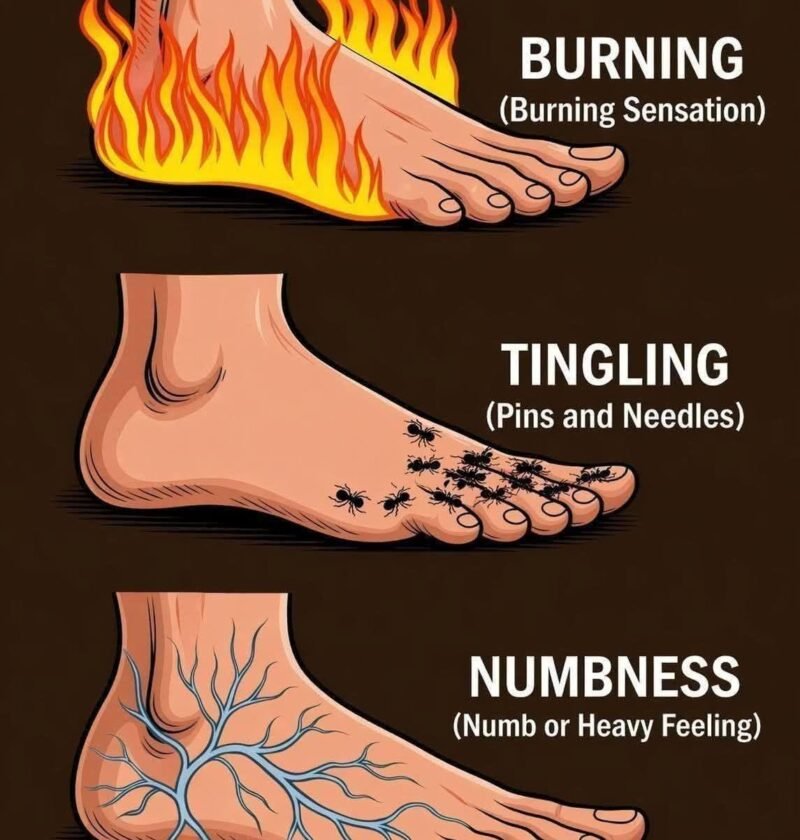
Experiencing burning, numbness, or tingling in your feet—often described clinically as paresthesia—is a very common physical sensation, but it is also one of the body’s primary ways of signaling that a nerve is irritated, compressed, or under stress.
While a temporary “pins and needles” feeling after sitting cross-legged for too long is completely harmless, persistent or recurring burning and numbness deserve a closer look.
Here is a breakdown of what these foot sensations can mean, ranging from everyday factors to underlying medical conditions:
1. Everyday or Temporary Causes
Sometimes, nerve discomfort in the feet is entirely mechanical and resolves quickly:
-
Nerve Compression (Position Pressure): Sitting or sleeping in a way that temporarily pinches the nerves or restricts blood flow to your feet often triggers a sudden rush of tingling or burning as circulation and normal nerve signals return.
-
Footwear Issues: Shoes that are too tight, have narrow toe boxes, or lack proper arch support can put direct pressure on the nerves running through your feet, causing localized numbness or aching by the end of the day.
-
Overuse or Fatigue: Standing on hard surfaces for hours at a time can strain the muscles and connective tissues in your feet, occasionally irritating nearby superficial nerves.
2. Common Medical Triggers
When burning, numbness, or tingling happens frequently or lingers, it often points to an underlying nerve or circulatory issue:
-
Peripheral Neuropathy (Often Diabetes-Related): Chronically elevated blood sugar can damage the delicate small blood vessels and nerve fibers in the extremities. This typically starts as a symmetrical “stocking” numbness or burning that begins in the toes and gradually moves up the feet and legs.
-
Tarsal Tunnel Syndrome: Similar to carpal tunnel syndrome in the wrist, this occurs when the tibial nerve is squeezed or compressed as it passes through the narrow space inside your ankle, causing burning, pain, or tingling on the sole of the foot.
-
Vitamin Deficiencies: Low levels of essential vitamins—particularly Vitamin B12 or other B-complex vitamins, which are crucial for maintaining healthy nerve sheaths—frequently manifest as numbness and tingling in the hands and feet.
-
Sciatica or Lumbar Nerve Compression: A pinched nerve in your lower back (due to a herniated disc, spinal stenosis, or bone spurs) can send shooting pain, numbness, or a burning sensation down your sciatic nerve all the way into your feet.
-
Circulatory Issues: Poor blood flow to the lower extremities can sometimes mimic or contribute to nerve discomfort, making your feet feel cold, numb, or fatigued.
Red Flags: When to Seek Prompt Medical Evaluation
While occasional mild tingling from a poor sleeping position is normal, you should schedule an evaluation with a doctor if your symptoms are persistent, worsening, spreading up your legs, or interfering with your balance and sleep.
Seek medical attention promptly if the numbness or burning is accompanied by:
-
Sudden weakness in your foot or leg (e.g., trouble lifting your toes or tripping)
-
Unexplained open sores, blisters, or cuts on your feet that won’t heal
-
Loss of temperature sensation or inability to feel the ground properly when walking
Have you noticed any specific patterns to when this burning or tingling happens—such as at night, after long periods of walking, or when wearing certain shoes?