🌱 How to Eliminate Weeds Naturally—and Keep Them From Coming Back
Unfortunately, there isn’t a single natural treatment that kills every weed forever without potentially damaging your soil or desirable plants. The most effective approach is to remove existing weeds and then prevent new seeds from getting established.
1. Pull weeds before they seed
Pull or dig them out when the soil is slightly damp. Try to remove the entire root, especially with perennial weeds.
2. Cover the soil
Apply about 5–8 cm (2–3 inches) of organic mulch such as shredded bark, wood chips, or straw. Keep mulch a little away from plant stems and tree trunks. Blocking light makes it much harder for many weed seeds to grow.
3. Use cardboard for larger areas
For an area you’re converting into a garden bed, overlapping plain cardboard and covering it with several centimeters of mulch can suppress existing vegetation without herbicides.
4. Don’t let weeds produce seeds
Regularly remove weeds before they flower and set seed. This is one of the simplest ways to reduce the weed population over time.
5. Keep bare soil to a minimum
Planting ground covers or desirable plants close enough to shade the soil leaves fewer opportunities for weeds to establish.
6. Use boiling water carefully
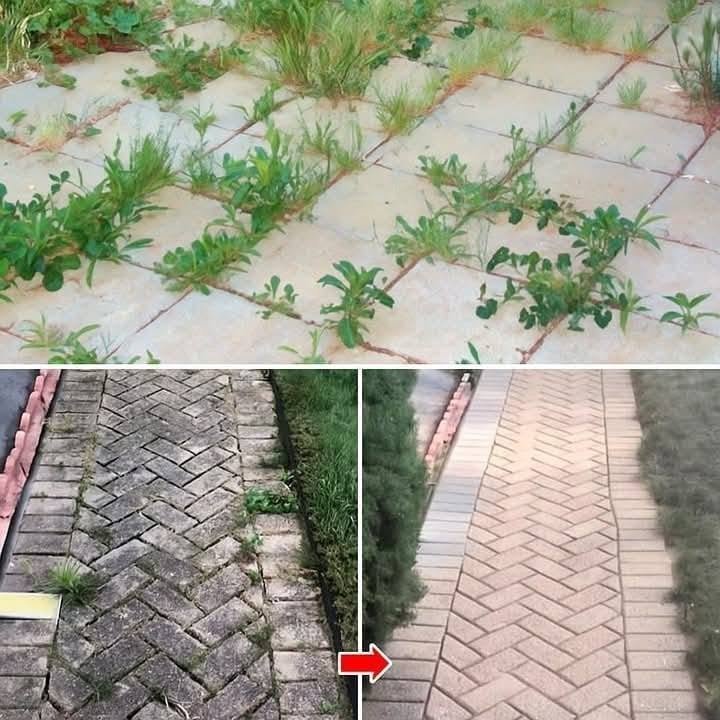
Boiling water can kill small weeds growing in driveways, paths, or cracks, but it also kills desirable plants and soil organisms it contacts. Keep it away from garden beds and tree roots.
🚫 Be cautious with homemade “weed killers”
Recipes using salt or strong vinegar can damage surrounding plants and soil. Salt in particular can accumulate and make soil difficult to grow plants in. Don’t assume that “natural” means harmless.
Best long-term strategy: remove existing weeds + cover the soil + prevent seed production. That can dramatically reduce weeds, but no method can honestly guarantee they’ll never return—wind, birds, animals, and dormant seeds can continually introduce new ones.