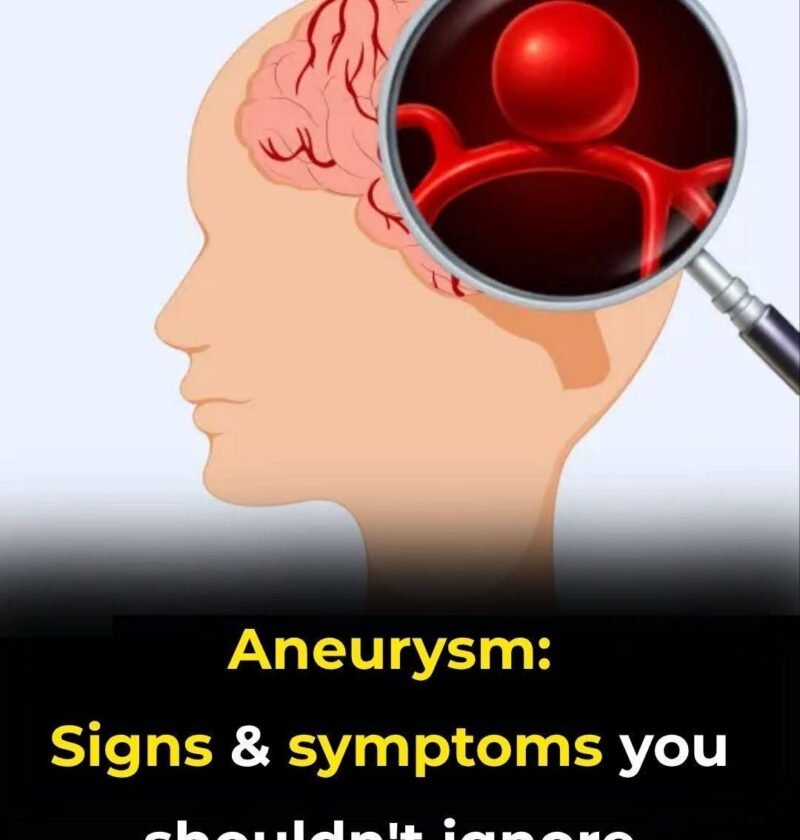
Many brain aneurysms are “silent” and produce no symptoms until they grow large or rupture. However, depending on whether an aneurysm is pressing on surrounding brain tissue (unruptured) or leaking/bursting (ruptured), the body can send critical warning signals.
Recognizing these signs can be lifesaving. Here are 12 signs of a brain aneurysm that should never be ignored:
Signs of a Ruptured or Leaking Aneurysm (Medical Emergency)
When an aneurysm bursts or leaks blood into the brain (subarachnoid hemorrhage), it triggers acute, severe symptoms that demand immediate emergency care.
-
The “Thunderclap” Headache
-
This is the hallmark sign of a ruptured aneurysm. It is a sudden, intensely severe headache that strikes out of nowhere and reaches its peak intensity within seconds. Patients often describe it as “the worst headache of my life”.
-
-
Stiff Neck or Neck Pain
-
Irritation from bleeding in the brain can cause severe neck rigidity, making it painful or impossible to touch your chin to your chest.
-
-
Nausea and Vomiting
-
Sudden, unexplained vomiting often accompanies the intense pressure and pain of a ruptured aneurysm.
-
-
Sensitivity to Light (Photophobia)
-
Bright lights can become agonizingly painful when there is bleeding around the brain.
-
-
Sudden Confusion or Altered Mental State
-
Rapid changes in cognitive function, confusion, disorientation, or slurred speech can occur as the brain reacts to trauma and blood loss.
-
-
Loss of Consciousness or Fainting
-
A major rupture frequently causes a person to blackout, feel faint, or slip into a coma.
-
-
Seizures
-
The sudden chemical and physical trauma of a burst blood vessel can trigger a first-time seizure.
-
Signs of an Unruptured Aneurysm (Pressure-Induced Signs)
Even before a rupture, a growing or large unruptured aneurysm can press against delicate cranial nerves and brain structures.
-
Pain Above or Behind One Eye
-
A localized, persistent, or sharp ache directly around or behind a single eye can signal that an aneurysm is pressing on the nerves running through that area.
-
-
Changes in Vision (Blurred or Double Vision)
-
Pressure on the optic nerves can distort your sight, causing sudden double vision or blurring.
-
-
Drooping Eyelid or a Dilated Pupil
-
If an aneurysm impacts the third cranial nerve, it can cause one eyelid to abruptly droop (ptosis) or cause one pupil to appear noticeably larger than the other.
-
-
Numbness or Weakness on One Side of the Face or Body
-
Localized neurological compression can manifest as sudden numbness, a drooping face, or weakness in a single arm or leg.
-
-
Dizziness or Loss of Balance
-
Unexplained clumsiness, vertigo, or trouble with motor coordination can occasionally indicate that an aneurysm is impacting areas of the brain responsible for balance.
-
When to Call 911: If you or someone around you experiences a sudden, explosive “thunderclap” headache, paired with any of the red flags above (such as sudden vision changes, a stiff neck, confusion, or loss of consciousness), call emergency services immediately. Time is critical in preventing permanent brain damage or fatal complications