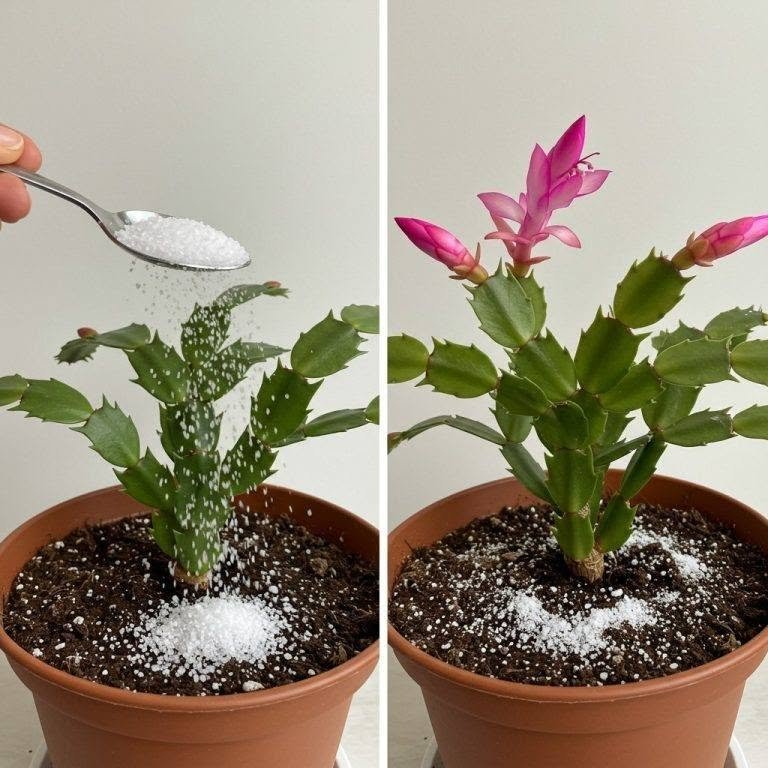
If you’re referring to the viral “fall awakening” houseplant trick, the “little secret” is usually adjusting care as the seasons change, rather than adding a magic ingredient.
🍂 How to revive houseplants in fall
As temperatures and daylight change, many indoor plants naturally slow their growth. Try these steps:
- Move plants toward brighter indirect light. Shorter fall days can mean they’re no longer receiving enough light.
- Reduce watering gradually. Don’t water on a fixed schedule. Check the soil first; many houseplants need less water as growth slows.
- Avoid cold drafts. Keep plants away from cold windows, exterior doors, and heating vents.
- Pause or reduce fertilizer. If a plant isn’t actively growing, excess fertilizer can accumulate in the soil and damage roots.
- Check for pests. Spider mites, scale, mealybugs, and fungus gnats can become noticeable when plants are moved indoors.
- Clean the leaves. Gently wiping dusty leaves can improve their ability to absorb light.
- Prune damaged or dead growth. This can improve appearance and reduce places where pests or disease can persist.
🌱 What about a “secret” homemade mixture?
Be cautious with recipes calling for sugar, milk, coffee, vinegar, baking soda, or other kitchen ingredients. They aren’t universal plant fertilizers and can attract pests, encourage microbial growth, or damage roots.
For most houseplants, the real “secret” is much less exciting: appropriate light + correct watering + good drainage + seasonal adjustment.
If you tell me the type of houseplant (peace lily, orchid, pothos, etc.), I can give you a specific fall-care routine.