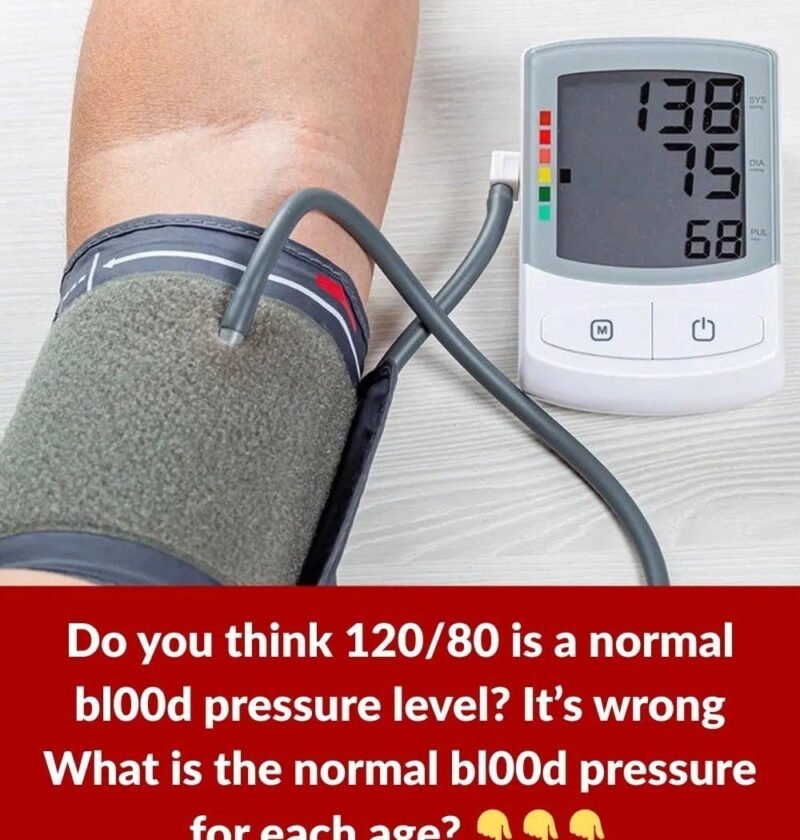
The common mistake is thinking that normal blood pressure increases with age—for example, that 150/90 is “normal” simply because someone is 70. For adults, that is not the current guideline.
According to the 2025 American Heart Association/American College of Cardiology guideline, adult blood-pressure categories are the same regardless of age. (American Heart Association)
| Blood pressure | Meaning |
|---|---|
| <120 / <80 | ✅ Normal |
| 120–129 / <80 | Elevated |
| 130–139 or 80–89 | High — Stage 1 |
| ≥140 or ≥90 | High — Stage 2 |
| >180 and/or >120 | 🚨 Severe hypertension |
What about different ages?
- 18–39: Normal is below 120/80
- 40–59: Normal is below 120/80
- 60–69: Normal is below 120/80
- 70–79: Normal is below 120/80
- 80+: There isn’t a special “normal” number simply because of age; treatment targets may be individualized according to overall health and circumstances. (American Heart Association)
The treatment goal for most adults is <130/80 mmHg, although doctors may individualize this for certain people. (American Heart Association)
Important: One unusual reading doesn’t necessarily mean you have hypertension. Blood pressure should be measured correctly and considered over repeated readings. (American Heart Association)
If you give me your age and your blood-pressure reading (for example, 68 years old, 145/85), I can explain exactly what it means.