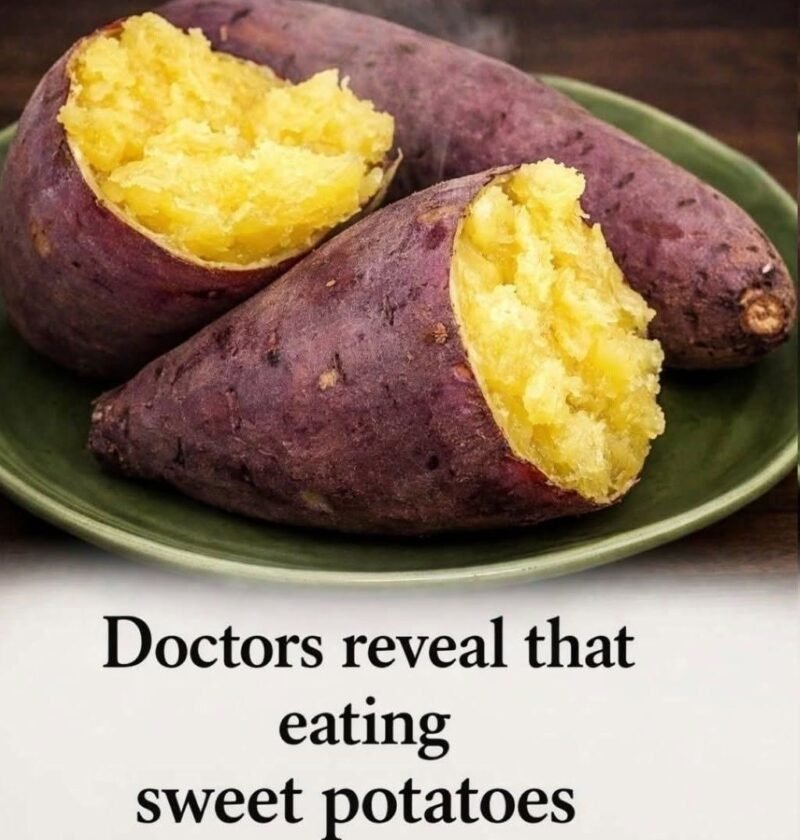
Phrases like “Doctors reveal that eating sweet potatoes causes…” are classic examples of clickbait headlines designed to spark curiosity. In reality, medical professionals and nutritionists don’t view sweet potatoes as a hidden hazard—instead, they consider them an exceptionally healthy, nutrient-dense food.
When eaten as part of a balanced diet, regular consumption of sweet potatoes causes several scientifically backed health benefits, along with a few minor side effects if consumed in extreme excess:
What Sweet Potatoes Actually Do For Your Body
-
Improved Eye Health: Sweet potatoes (especially orange-fleshed varieties) are packed with beta-carotene, which your body converts into vitamin A to support vision and immune function.
-
Better Digestion and Gut Health: They are rich in both soluble and insoluble fiber, which feeds healthy gut bacteria, prevents constipation, and promotes regular bowel movements.
-
Steady Blood Sugar Regulation: Despite their sweet taste, sweet potatoes have a moderate glycemic index and contain specific compounds (like white sweet potato extract, Caiapo) that clinical studies suggest can help improve insulin sensitivity and lower blood sugar spikes.
-
Reduced Inflammation: Packed with antioxidants like anthocyanins (found in purple sweet potatoes), they help fight cellular damage and chronic inflammation.
Are There Any Risks?
While they are overwhelmingly good for you, eating massive quantities of sweet potatoes can occasionally lead to a couple of harmless or manageable side effects:
-
Carotenemia: If you eat an extreme amount of beta-carotene-rich foods (like carrots and sweet potatoes), your skin can temporarily turn a yellowish-orange tint. This is entirely harmless and reverses when you scale back your intake.
-
Kidney Stones / Potassium Considerations: Sweet potatoes contain oxalates and are high in potassium. For individuals prone to calcium-oxalate kidney stones or those with advanced kidney disease who need to monitor potassium, portions should be managed with a doctor’s guidance.
If you saw a specific claim online attached to that headline and want to know if it’s true, feel free to share what it said!