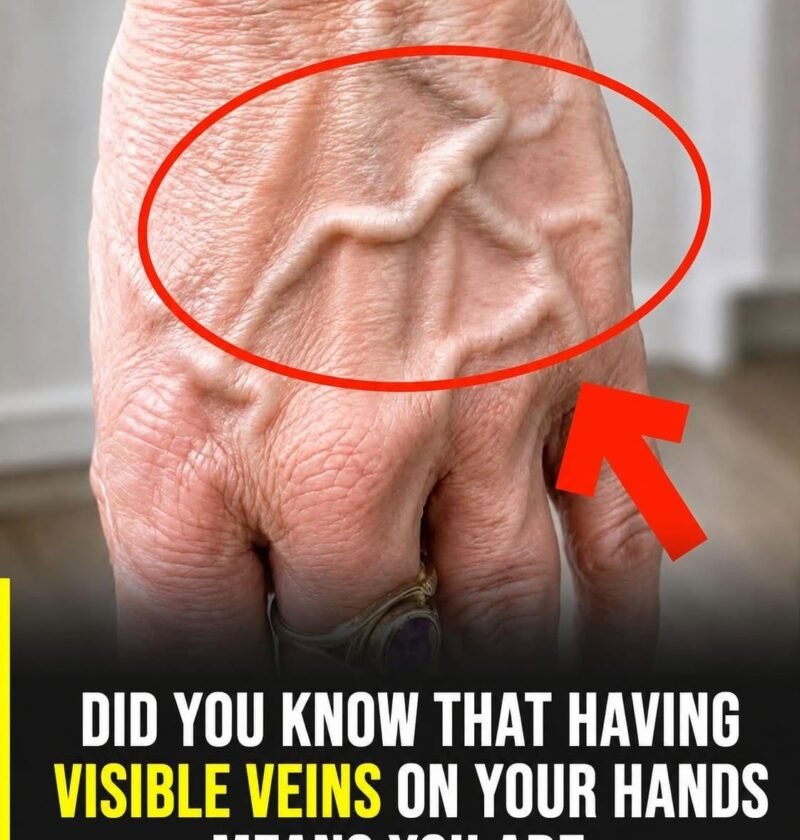
Phrases like “Having visible veins means you are…” are another classic clickbait formula designed to make you click to find out some “secret” about your health or fitness.
In reality, having visible veins is extremely common and doesn’t point to just one single hidden truth. Instead, what visible veins mean depends entirely on your body, lifestyle, and where the veins are located.
Here is what healthcare professionals and fitness experts actually say about visible veins:
1. You Have Low Body Fat (Athletic/Lean)
For many people, particularly fitness enthusiasts or athletes, visible veins are simply a sign of low subcutaneous fat (the fat layer just beneath the skin). When body fat drops, it acts less like a blanket, allowing the veins underneath to become more prominent. This is why bodybuilders often have highly visible vascularity.
2. You Have Thin or Fair Skin
Genetics play a huge role in how visible your veins are. People with very fair, pale, or thin skin naturally show blue or green veins much more easily because the light passes through the skin to the blood vessels more readily than it does on thicker or darker skin tones.
3. Your Body is Responding to Heat or Exercise
When you exercise, your body generates heat, causing your blood vessels to dilate (widen) and move closer to the surface of the skin to help cool you down. Similarly, hot weather causes your veins to expand, making them pop out more than they would on a cold day.
4. Natural Aging
As we age, our skin naturally loses elasticity and thins out, and the tissues supporting our veins weaken. This is why older adults frequently have prominent veins on their hands, arms, and legs.
When Should You Pay Attention to Visible Veins?
While surface veins are usually entirely harmless, certain types of visible veins can indicate an underlying medical condition:
-
Varicose Veins: If veins in the legs become twisted, enlarged, bulging, or painful, it can be a sign of chronic venous insufficiency (where the tiny valves inside the veins aren’t working properly to push blood back up to the heart).
-
Spider Veins: These are smaller, damaged networks of blood vessels closer to the skin’s surface, often caused by genetics, hormonal changes, or prolonged standing.
If the clickbait phrase you saw was hinting at a specific trait—like having high intelligence, a fast metabolism, or a specific deficiency—let me know and we can bust the myth (or see if there’s any truth to it)