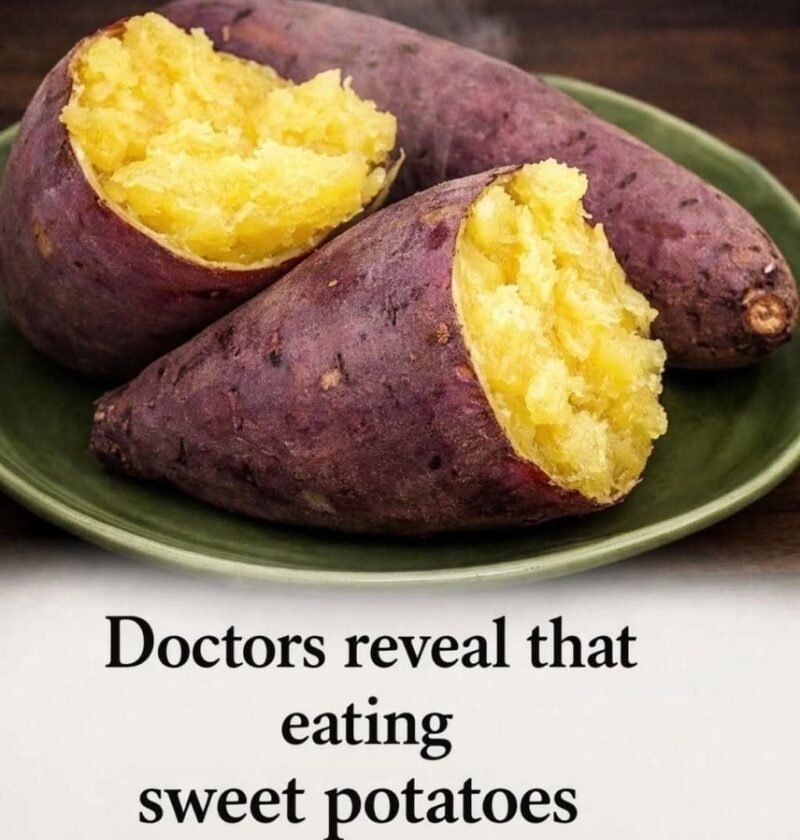
…another classic cliffhanger headline trying to demonize one of the healthiest vegetables on the planet!
When a headline uses dramatic ellipses like “Doctors reveal that eating sweet potatoes causes…”, it’s deliberately weaponizing your curiosity. The internet loves to take a wholesome, nutrient-dense food and spin it into a scary “hidden danger” just to get you to click.
So, what is the internet’s latest terrifying “discovery” about sweet potatoes? Does a single baked sweet potato spell doom? Absolutely not.
Let’s strip away the dramatic clickbait pause and look at what sweet potatoes actually do to your body:
🟢 What Sweet Potatoes Actually Do (The Real Science)
Sweet potatoes are widely considered a nutritional powerhouse for a reason:
-
Packed with Beta-Carotene: They are loaded with antioxidants that your body converts into Vitamin A, which supports your immune system, vision, and skin health.
-
Steady Fiber: They provide complex carbohydrates and fiber, which digest slowly and help maintain stable blood sugar levels compared to regular white potatoes or refined grains.
-
Vitamins and Minerals: They are rich in potassium, Vitamin C, and B vitamins.
🔍 Where Do the “Scary” Headlines Come From?
When these articles finally stop stalling and reveal their “shocking” point, they usually twist a couple of very mild, situational facts out of proportion:
-
The “Carotenemia” Myth: If you literally eat kilograms of sweet potatoes, carrots, and pumpkins every single day for weeks on end, the excess beta-carotene in your blood can turn your skin a harmless, temporary yellowish-orange tint called carotenemia. It’s entirely harmless, but articles love to frame it like a toxic poisoning event.
-
Kidney Stones (Oxalates): Sweet potatoes contain oxalates, which can contribute to kidney stones in people who are specifically prone to them. If you have a history of calcium oxalate stones, your doctor might advise you to moderate your intake—just like they would with spinach, nuts, or chocolate. But for the general population, it’s a non-issue.
-
Blood Sugar Nuance: While they are healthier than white potatoes, they are still a carbohydrate. If someone with poorly managed diabetes eats a massive, butter-and-sugar-laden sweet potato casserole, their blood sugar will rise—which has more to do with portion size and toppings than the sweet potato itself.
The Bottom Line: You can safely enjoy your sweet potatoes roasted, baked, or mashed without fear. They are not a secret health hazard; they’re just a great vegetable.
Did a dramatic article try to convince you that your favorite side dish is secretly ruining your health?