💅 Can Your Nails Predict How Long You’ll Live?
You may have seen headlines claiming that a doctor can look at your fingernails and predict your life expectancy. That’s an exaggeration.
There is no nail feature that can reliably tell you how many years you have left to live. However, certain nail changes can occasionally provide clues about underlying health problems and deserve medical attention.
Nail changes worth knowing about
New dark or brown streak: A new pigmented band, particularly one affecting a single nail and becoming wider or changing, should be examined to rule out melanoma.
Blue or gray nails: Can sometimes occur with reduced oxygen levels or circulation problems and should be evaluated, especially when accompanied by breathing difficulties.
Clubbed nails: Nails that become unusually rounded with enlarged fingertips can be associated with certain lung, heart, or gastrointestinal conditions.
Spoon-shaped nails: Nails that become thin and concave can sometimes be associated with iron deficiency.
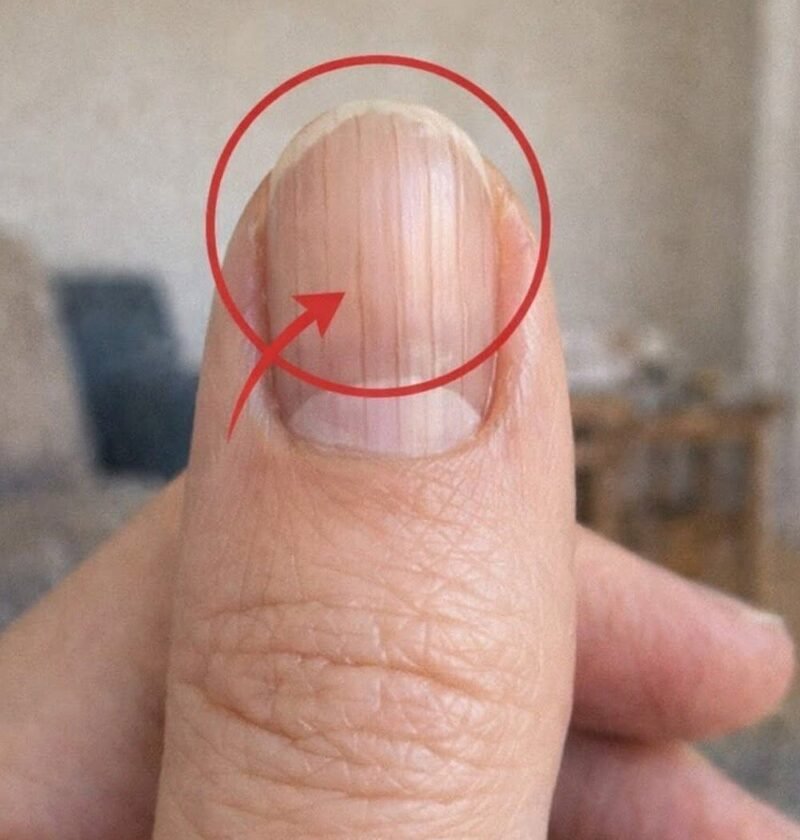
Brittle or splitting nails: Often caused by aging, repeated exposure to water or chemicals, or trauma, but persistent changes can have other causes.
A new line or groove across several nails: This can sometimes appear after a significant illness or physical stress because nail growth temporarily slows.
🚨 Don’t diagnose yourself from nail appearance
Most nail abnormalities do not mean you have a serious disease, and many have simple explanations such as injury, fungal infection, aging, or nutritional issues.
If you notice a new, persistent, or rapidly changing nail abnormality, particularly a dark streak on one nail, arrange an examination with a healthcare professional.
Bottom line: Your nails can sometimes provide useful health clues, but they cannot accurately predict your life expectancy. Claims that a particular nail sign tells you how long you will live are not medically reliable.