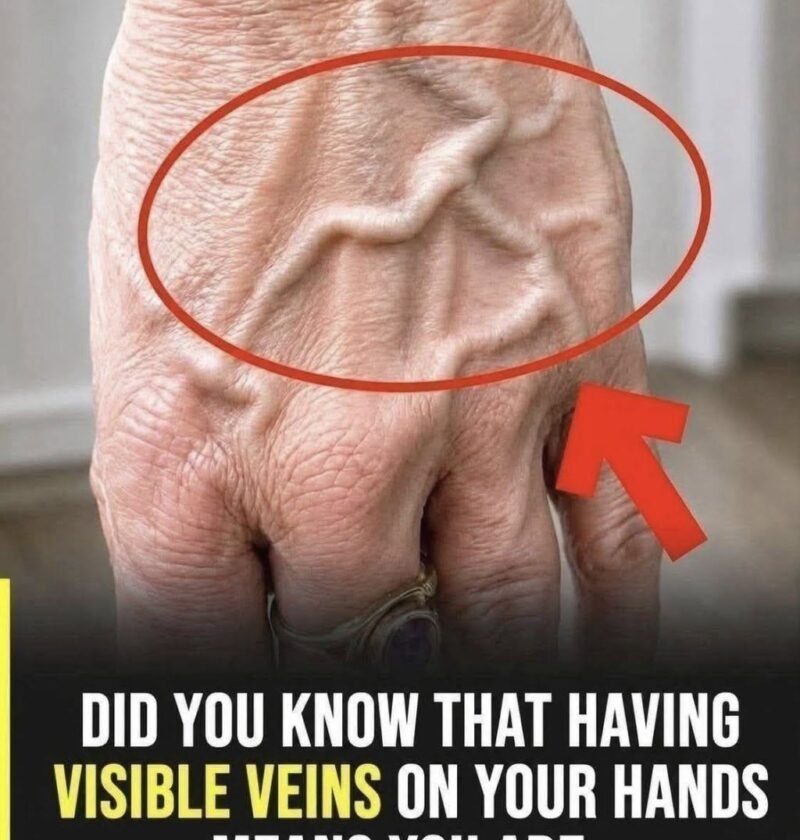
Clickbait headlines like “Did you know that having visible veins means you are…” usually lead to sweeping, oversimplified claims—ranging from being “super fit with low body fat” to implying an immediate medical emergency.
In reality, visible or prominent veins don’t point to just one thing. Whether they are completely harmless or worth a doctor’s visit depends entirely on your genetics, lifestyle, and where or how those veins appear.
What Having Visible Veins Actually Means
Instead of a single hidden secret, visible veins can mean a variety of completely normal things, as well as a few medical conditions:
-
You Have Lower Body Fat or Higher Muscle Mass: If your veins are prominent in your arms, hands, or legs, it often means you have a lower body fat percentage or have built up muscle through regular exercise. When fat layers under the skin are thin, veins naturally sit closer to the surface.
-
It’s Just Your Genetics and Skin Tone: Fair skin makes underlying blue and green blood vessels naturally easier to see. Furthermore, if your parents or grandparents had prominent veins or spider veins, you inherited that structural trait.
-
You Are Aging: As people get older, skin naturally loses collagen and elasticity, and the thin layer of fat beneath the skin diminishes. This causes superficial veins to stand out much more than they used to.
-
Temporary Factors (Heat, Exercise, or Pressure): Working out temporarily increases blood pressure and expands blood vessels. Hot weather causes your body to push blood closer to the skin’s surface to cool down, making veins temporarily bulge.
When Visible Veins Do Signal a Medical Issue
While most visible veins are entirely benign, certain changes can point toward underlying circulation problems, such as varicose veins or chronic venous insufficiency. You should pay closer attention if your veins are accompanied by:
-
Aching, heaviness, or throbbing pain in your legs
-
Swelling in your lower legs, ankles, or feet
-
Skin discoloration, dryness, or open sores near the ankles
-
A vein that feels hard, warm, tender, or painful to the touch (which can sometimes indicate superficial clots or inflammation)