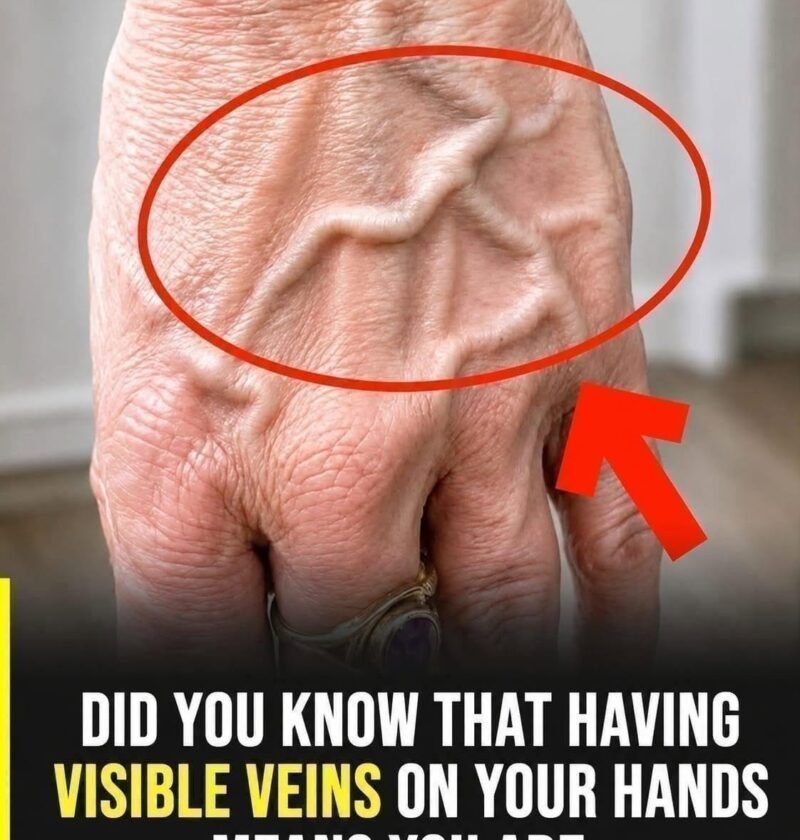
If the headline is “Did you know that having visible veins means you are…”, the missing ending is often something like “fit,” “lean,” or “healthy.” But that’s misleading.
What visible veins can actually mean
1. You may have relatively low body fat.
With less fat beneath the skin, superficial veins are easier to see. This is particularly noticeable on the hands, forearms and arms.
C
Cleveland Clinic
+1
2. You may have more muscle.
Resistance training and intense exercise increase blood flow and can make superficial veins temporarily or persistently more prominent.
C
Cleveland Clinic
3. Heat and exercise can make veins stand out temporarily.
Blood vessels widen during exercise and heat, increasing blood flow near the skin.
C
Cleveland Clinic
4. Aging can make veins more visible.
As skin becomes thinner and less elastic with age, veins may simply become easier to see. Aging also increases the likelihood of varicose veins.
C
Cleveland Clinic
+1
5. Sometimes prominent veins indicate a vein problem.
Bulging, twisted veins in the legs can be varicose veins, which occur when vein valves don’t work properly and blood pools in the veins.
C
Cleveland Clinic
+1
When you shouldn’t ignore them
If a vein has suddenly become prominent or is accompanied by pain, redness, warmth, swelling or tenderness, get medical advice. Those symptoms can occur with inflammation or a blood clot.
C
Cleveland Clinic
+1
So the accurate version is:
Visible veins can be completely normal and may reflect genetics, low body fat, muscle development, exercise, heat or aging—but they aren’t by themselves proof that you’re healthy or fit.
C
Sources