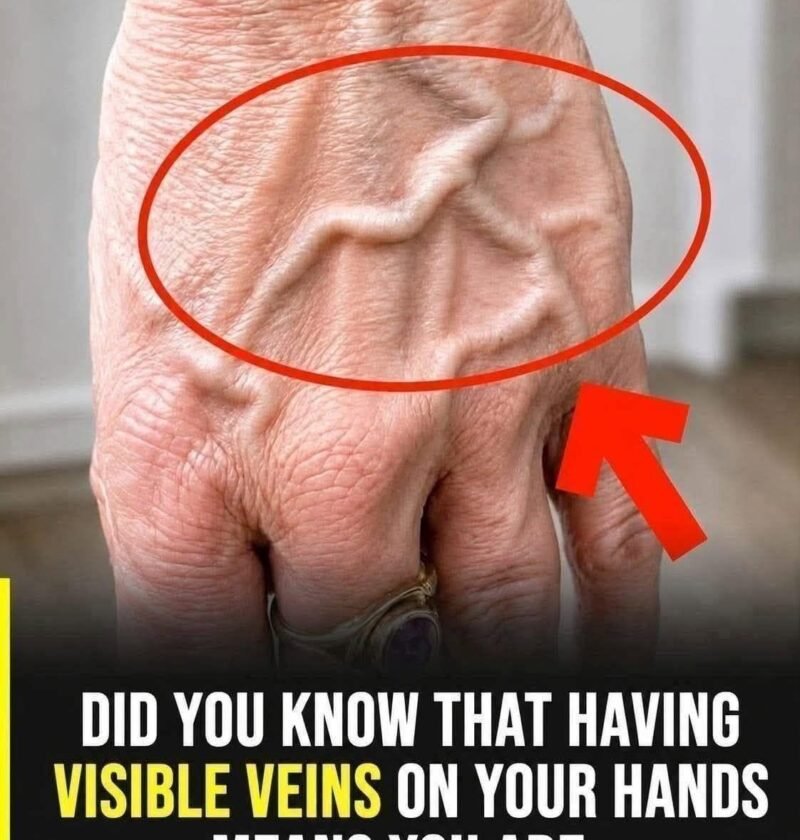
“Having visible veins means you are…” — what does it actually mean?
Visible veins usually don’t mean something is wrong. Veins close to the surface can become more noticeable for completely normal reasons.
Common explanations
-
Lower body fat: Less tissue covering superficial veins makes them easier to see.
-
Exercise: Increased blood flow can temporarily make veins more prominent.
-
Heat: Warm temperatures widen blood vessels near the skin.
-
Age: Skin becomes thinner and less elastic over time, making veins more visible.
-
Genetics: Some people naturally have prominent veins.
-
Dehydration: Fluid loss can sometimes make veins appear more pronounced.
When visible veins could signal a problem
Pay attention if the change is new, sudden, or associated with other symptoms. For example:
-
A leg suddenly becomes swollen, painful, warm, or red
-
A vein becomes hard, tender, or inflamed
-
There is persistent swelling or skin discoloration
-
Prominent, twisted veins develop in the legs and cause aching or heaviness
A sudden painful, swollen leg can be a sign of a blood clot (DVT) and needs prompt medical evaluation.
What visible veins do not prove
Seeing veins doesn’t by itself mean you have poor circulation, “thick blood,” high blood pressure, heart disease, or dehydration. Those conditions require appropriate assessment rather than judging them from appearance.
Bottom line: If your veins have always been visible and you feel well, they’re often simply a normal feature of your anatomy. A new change plus symptoms is much more important than visibility alone.