Snakes have a fascinating and highly specialized respiratory and sensory system! Instead of relying solely on their noses, they use their forked tongues to collect scent particles from the air and environment, transferring them to an organ in the roof of their mouth called the Jacobson’s organ (or vomeronasal organ).
Because their sense of smell is so acute, certain strong, pungent aromas can overwhelm their sensory system, making them uncomfortable and driving them away.
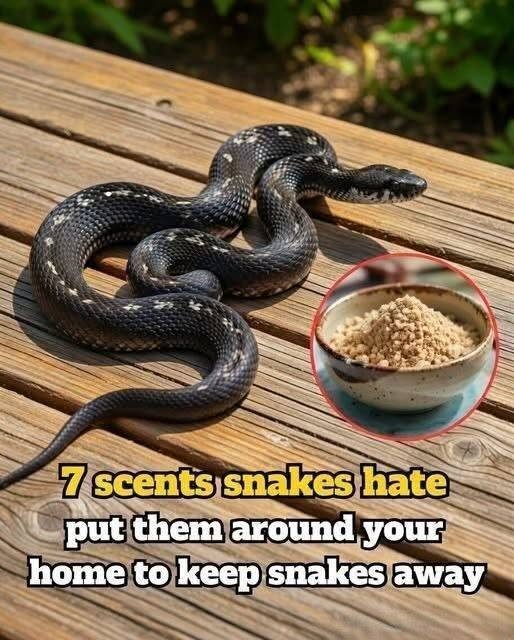
7 Scents Snakes Hate & How to Use Them
1. Snake Plant (Sansevieria)
-
Why they hate it: While the name is ironic, snakes dislike the sharp, upright leaves and the subtle scent profile of the snake plant. Its dense growth can also physically obstruct their movement.
-
How to use it: Plant them in pots or flower beds near entryways, porches, and around the perimeter of your house to act as a natural, low-maintenance deterrent barrier.
2. Essential Oils (Peppermint, Clove, and Cinnamon)
-
Why they hate it: Concentrated essential oils release volatile organic compounds that are overwhelmingly intense for a snake’s sensitive olfactory receptors. Peppermint and clove oils are particularly effective.
-
How to use it: Mix 10 to 20 drops of peppermint or clove essential oil with water and a tiny drop of dish soap (as an emulsifier) in a spray bottle. Spray this mixture around doors, windows, patio edges, and dark garage corners. Reapply after rain.
3. Garlic and Onions
-
Why they hate it: Garlic and onions contain sulfur compounds (like the one that makes you cry when cutting onions) which release a strong, pungent odor that snakes strongly avoid.
-
How to use it: Chop up fresh garlic and onions and mix them with rock salt, or blend them with water to create a spray. You can also scatter crushed garlic cloves in areas where you want to discourage snakes from hiding, though you will need to replace them as they dry out.
4. White Vinegar
-
Why they hate it: Vinegar is intensely acidic and pungent. Snakes hate getting it on their skin or smelling its sharp vapor.
-
How to use it: Pour plain white vinegar around the perimeter of swimming pools, pond edges, or garden sheds. Pouring vinegar near rock piles or wood stacks can also make those cozy hiding spots unappealing to them. (Note: Avoid pouring it directly onto plants you want to keep alive, as the acidity can harm them.)
5. Sulfur (Powdered Sulfur)
-
Why they hate it: Powdered sulfur has a notoriously rotten-egg smell that irritates a snake’s respiratory system and sensory organs.
-
How to use it: Sprinkle powdered sulfur granules around the boundaries of your property or yard. Caution: Use gloves and a mask when applying sulfur, keep it away from pets and children, and avoid using it in heavy rain zones where it can wash away into waterways.
6. Marigolds
-
Why they hate it: Marigolds are famous garden protectors. They emit a strong, earthy, and pungent scent from both their roots and flowers that many pests—including snakes, beetles, and rabbits—prefer to avoid.
-
How to use it: Plant borders of marigolds around your flower beds, vegetable garden, or patio perimeter.
7. Lemongrass and Citronella
-
Why they hate it: Citrus and sharp grassy notes are generally unappealing to snakes. Citronella is not only great for keeping mosquitoes away, but its intense aromatic profile also helps deter slithering visitors.
-
How to use it: Plant clumps of lemongrass around outdoor seating areas, or use citronella torches and concentrated grass oils around your yard.
Pro-Tip: Scents Are Only Part of the Solution
While these scents can help deter snakes temporarily, the most effective way to keep them away is to remove what attracts them in the first place:
-
Clear out hiding spots: Keep grass trimmed, remove tall brush, and elevate wood piles or building materials off the ground.
-
Control pests: Snakes follow their food source. Fixing rodent or insect problems will naturally encourage snakes to look elsewhere for meals.
-
Seal entry points: Block gaps under doors, crawl spaces, and foundation cracks.
Are you currently dealing with a snake visiting your yard or garden, or are you just looking for proactive ways to pet-proof or child-proof your outdoor space?