Brittle or Weak Nails May Signal More Than You Think
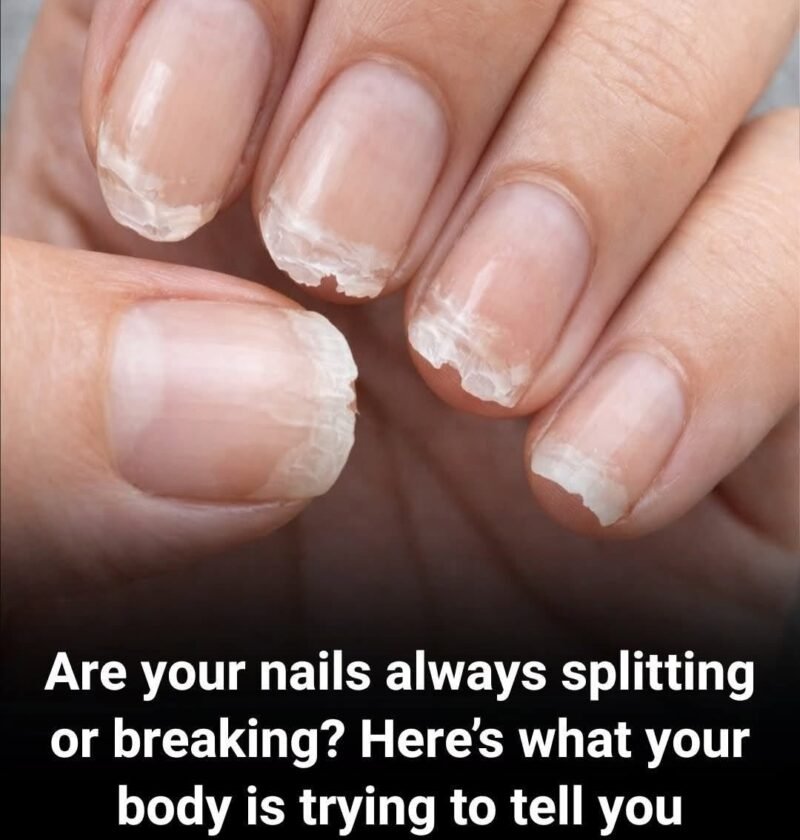
Weak, peeling, or easily broken nails are common and are often caused by everyday habits. But persistent nail changes can sometimes provide clues about your health.
1. Iron Deficiency
Thin, spoon-shaped nails can sometimes be associated with iron deficiency. A blood test can help determine whether you actually have low iron.
2. Thyroid Problems
Thyroid conditions can cause nails to become dry, brittle, soft, or prone to peeling and breaking.
3. Fungal Infection
A fungal infection may cause nails to become thick, discolored, brittle, cracked, or crumbly.
4. Too Much Water or Chemicals
Frequent handwashing, cleaning products, and repeated exposure to water can weaken nails over time. Harsh nail treatments can also contribute.
5. Aging
Nails naturally grow more slowly and can become more fragile as we get older. Brittle nails alone do not necessarily mean you have a disease.
How to Protect Your Nails
- Keep nails trimmed and clean.
- Wear gloves when using cleaning products.
- Moisturize your hands and nails regularly.
- Avoid picking, biting, or aggressively filing your nails.
- Don’t start iron or other supplements simply because your nails are weak—get medical advice first.
When Should You Get Checked?
See a doctor or dermatologist if nail changes are new, persistent, painful, spreading, or accompanied by changes in nail color, thickening, swelling, or hair and skin changes. Some nail conditions look similar but require different treatments.
Bottom line: Brittle nails are often caused by everyday wear and aging, but persistent changes can sometimes point to iron deficiency, thyroid problems, fungal infection, or another condition. Your nails can provide clues—but they cannot diagnose a disease by themselves.