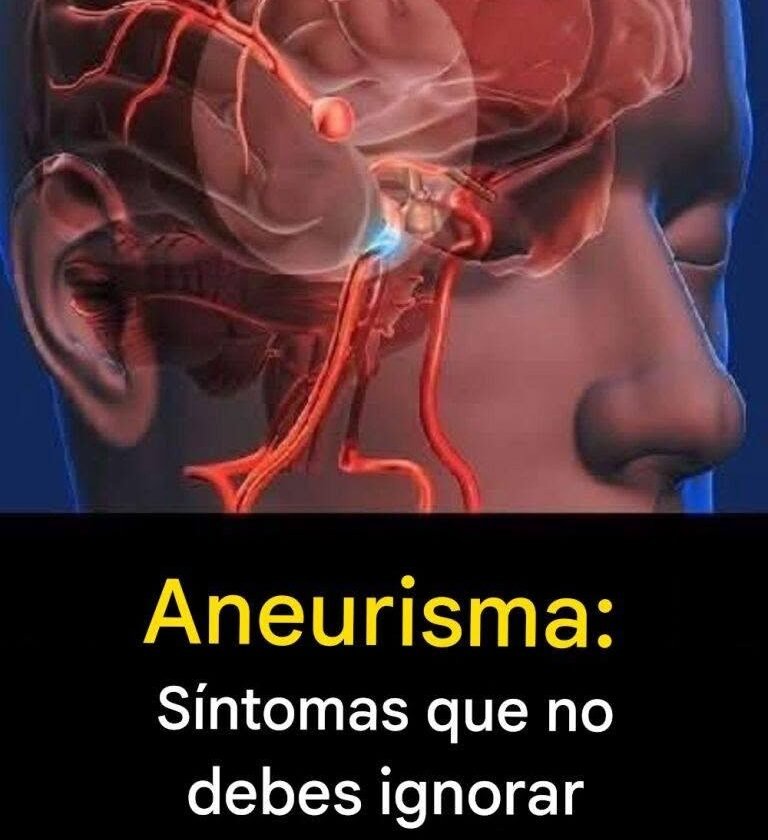
Aneurysm: signs you shouldn’t ignore
An aneurysm is a weakened area in a blood-vessel wall that bulges outward. Many aneurysms cause no symptoms and are discovered incidentally. The danger is that an aneurysm can sometimes rupture, causing life-threatening bleeding.
M
Mayo Clinic
+1
🧠 Brain aneurysm warning signs
An unruptured brain aneurysm often causes nothing. A larger one can sometimes cause:
Pain above or around one eye
Double or changed vision
Numbness or weakness on one side of the face
Problems with speech, balance, concentration, or memory
Headaches that persist or worsen
N
nhs.uk
The biggest emergency warning sign is a sudden, extremely severe headache—often described as a thunderclap or “worst headache of my life.” It may occur with vomiting, stiff neck, sensitivity to light, confusion, seizure, loss of consciousness, or neurological weakness.
M
Mayo Clinic
Call your local emergency number immediately if someone develops a sudden severe headache or these neurological symptoms. Don’t drive yourself to the hospital.
N
nhs.uk
❤️ Aortic aneurysm warning signs
An abdominal aortic aneurysm may cause deep, persistent abdominal or back pain or a pulsing sensation near the belly button. Many, however, have no symptoms.
M
Mayo Clinic
A rupture can cause sudden severe abdominal or back pain, sometimes described as ripping or tearing, along with low blood pressure or a rapid pulse. That’s an emergency.
M
Mayo Clinic
Sudden severe chest or upper-back pain, especially with shortness of breath, fainting, or stroke-like symptoms, can also indicate a serious aortic problem and requires emergency care.
M
Mayo Clinic
Important
Don’t assume that an ordinary headache, backache, or abdominal pain means you have an aneurysm. Symptoms aren’t enough to diagnose one—imaging is usually required. Risk factors include smoking, high blood pressure, certain inherited conditions, and a family history of aneurysm, particularly for brain aneurysms.
M
Mayo Clinic
Bottom line: The symptoms that should never be ignored are sudden, severe “thunderclap” headache; sudden severe chest, abdominal, or back pain; fainting; or sudden neurological symptoms. These warrant emergency evaluation.
M
N
Sources