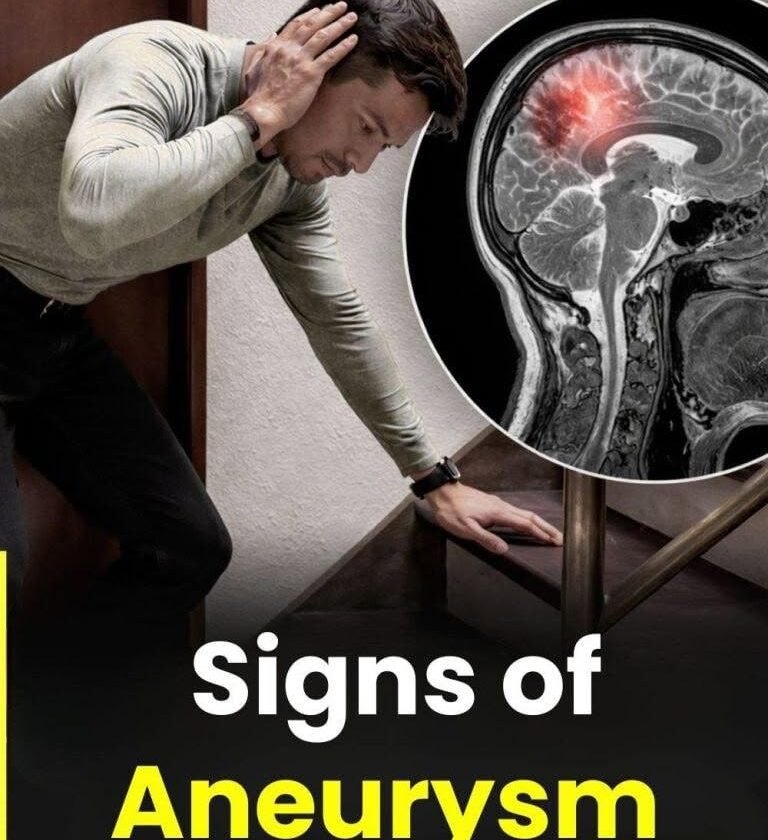
Aneurysm: 12 warning signs you should know
An aneurysm is a weakened area in an artery that bulges outward. It can occur in the brain, aorta, or other blood vessels. Importantly, many aneurysms cause no symptoms until they become large or rupture, so there isn’t a reliable list of 12 early symptoms that can detect every aneurysm. Mayo Clinic+1
Possible warning signs
Depending on where the aneurysm is located, symptoms can include:
Possible warning signs
-
Sudden, extremely severe headache — especially a headache that reaches maximum intensity within seconds (“thunderclap” headache).
-
Stiff or painful neck
-
Nausea or vomiting
-
Sudden vision changes, including blurred or double vision
-
Pain above or behind one eye
-
A dilated pupil
-
Numbness or weakness on one side of the face
-
Difficulty speaking or understanding speech
-
Seizure
-
Confusion or loss of consciousness
-
Sudden severe chest or upper-back pain — potentially associated with an aortic problem.
-
Sudden severe abdominal pain, shortness of breath, or collapse — possible symptoms of a complicated abdominal/aortic aneurysm. Mayo Clinic+2
These symptoms do not mean that a person definitely has an aneurysm. Several other conditions can produce them.
🚨 The symptom you must not wait on
A sudden, extraordinarily severe headache, particularly if accompanied by vomiting, stiff neck, vision changes, seizure, confusion, weakness, or loss of consciousness, can indicate bleeding from a ruptured brain aneurysm. This is a medical emergency. Mayo Clinic+1
Likewise, sudden severe chest, back, or abdominal pain, especially with fainting or difficulty breathing, requires emergency evaluation because an aortic dissection or rupture can be life-threatening. Mayo Clinic
Don’t drive yourself to the hospital in these circumstances—call your local emergency service.
One important misconception
You generally cannot tell that you have an aneurysm simply from headaches, visible veins, blood pressure readings, or other everyday symptoms. Some aneurysms are discovered incidentally on imaging performed for another reason. Mayo Clinic+1
If you’re experiencing a new sudden severe headache or sudden chest/back/abdominal pain right now, seek emergency medical care rather than waiting for additional symptoms.