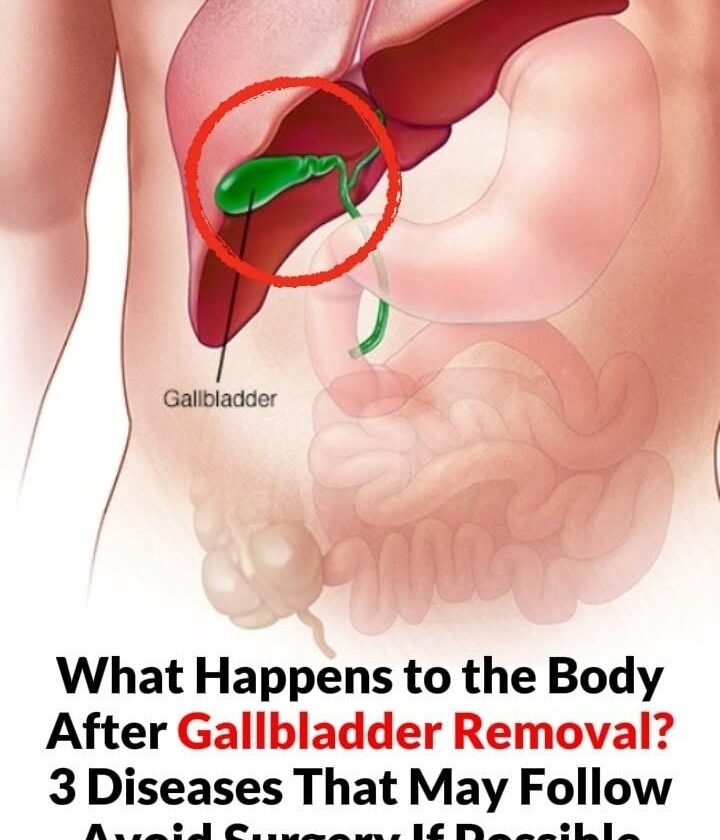
If you’re referring to a claim that “after gallbladder removal, you can develop 3 conditions, so you should avoid the surgery whenever possible,” that headline is too broad and potentially misleading.
Gallbladder removal (cholecystectomy) is generally considered a safe and effective treatment when gallstones are causing recurrent symptoms or complications. It is not necessary for everyone with gallstones—people with asymptomatic gallstones often do not need surgery. nhs.uk+1
Three problems that can occur after surgery
-
Diarrhea or altered bowel habits: Some people develop more frequent or loose stools because bile flows continuously into the intestine rather than being stored in the gallbladder. It can often be managed with diet or medication. FHFT+1
-
Persistent abdominal symptoms (post-cholecystectomy syndrome): Pain, indigestion, bloating, nausea, or diarrhea can persist in some patients. Importantly, this doesn’t necessarily mean the surgery caused a new disease; sometimes the original symptoms had another underlying cause. nhs.uk+1
-
Bile-duct or retained-stone complications: Rarely, a bile-duct injury, bile leak, or stone left in the bile duct can cause jaundice, pain, infection, or pancreatitis and may require another procedure. nhs.uk+1
Should you avoid gallbladder surgery?
Not automatically. The more useful question is why the surgery has been recommended.
If you have incidentally discovered gallstones but no symptoms, observation is commonly appropriate. nhs.uk
If you have recurrent typical gallstone attacks, cholecystitis, jaundice from a blocked duct, or gallstone pancreatitis, avoiding surgery can itself carry risks because gallstones can cause further attacks and serious complications. nhs.uk+1
For people with mild/moderate gallstone pain, an NHS England decision aid reports that after one year, about 65% of people who had surgery had no pain, compared with 40–50% of those who chose no surgery. NHS England
So the evidence supports avoiding unnecessary gallbladder removal, rather than avoiding the operation “whenever possible.”
If you give me the three conditions mentioned in the article/video you’re referring to, I can tell you which claims are medically accurate and which are exaggerated.