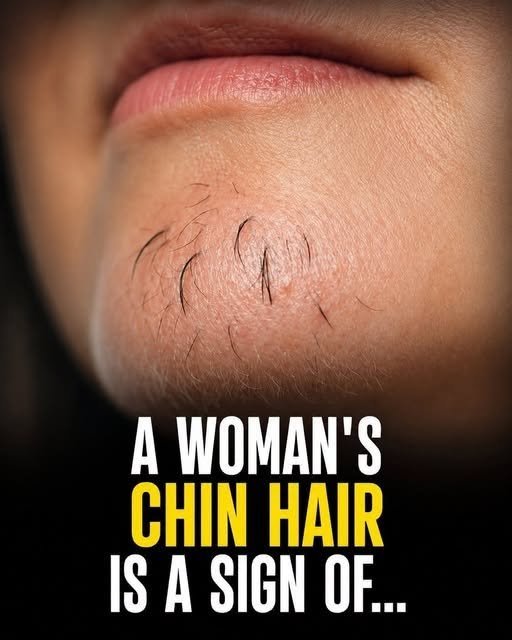
The phrase “A woman’s chin hair is a sign of…” is a classic clickbait teaser. Depending on which sensationalized wellness or beauty blog you click on, it usually jumps straight to alarmist claims, warning that a few stray chin hairs are a definitive sign of severe hormonal chaos, impending health collapse, or hidden disease.
In physiological reality, terminal hair growth on the chin is a common, natural variation in human hair patterns, but it can serve as an important biomarker for shifts in endocrine balance.
Let’s look past the internet panic and examine what science actually says about chin hair in women.
The Biological Reality: Why Do Women Get Chin Hairs?
Every woman has hair follicles across her face, including her chin. These start as fine, nearly invisible vellus hairs. However, hair growth is heavily influenced by androgens (hormones like testosterone that are present in both men and women, though in different quantities).
If follicles on the chin become sensitive to androgens, or if circulating androgen levels shift, those fine vellus hairs can transform into thicker, darker “terminal” hairs.
Here are the primary reasons this happens:
1. Normal Genetic and Ethnic Variations
-
The Reality: For millions of women, a few coarse chin hairs are entirely normal and driven simply by genetics and natural hair follicle density.
-
Why it happens: Women from Mediterranean, Middle Eastern, and South Asian backgrounds, in particular, often have a genetic predisposition to thicker or darker facial hair growth. If it has been a lifelong pattern and you have no other symptoms, it is typically just normal human variation.
2. Hormonal Shifts (Perimenopause and Menopause)
-
The Reality: As women transition into perimenopause and menopause, estrogen and progesterone levels drop significantly.
-
Why it happens: Because androgen levels decline at a much slower rate, the ratio of androgens to estrogen shifts. This relative surge in androgens frequently triggers new or increased hair growth on the chin and jawline later in life.
3. Polycystic Ovary Syndrome (PCOS)
-
The Reality: PCOS is a common endocrine disorder affecting roughly 6% to 10% of women of reproductive age. It is characterized by an overproduction of androgens.
-
Why it happens: Along with chin or jawline hair growth (hirsutism), PCOS is typically accompanied by other clinical signs, such as irregular menstrual cycles, stubborn weight changes, or acne. If chin hair appears suddenly, grows rapidly, and coincides with cycle irregularities, it warrants a conversation with an endocrinologist or gynecologist.
4. Medication Side Effects
-
The Reality: Certain medications can alter hormonal balance or stimulate hair growth as a direct side effect. This includes specific types of hormone therapies, corticosteroids, or medications used to treat neurological conditions.
The Takeaway
Finding a stray chin hair does not mean your body is broken. It is a very common, manageable physical trait that can stem from anything from normal genetics and aging to minor hormonal shifts.
If the growth is sudden, dense, or accompanied by other metabolic symptoms, it is simply a helpful physiological clue to discuss with your doctor—not a reason to panic over internet headlines.