A Protruding Lower Belly and Stiff Lower Back: Could the Psoas Be Involved?
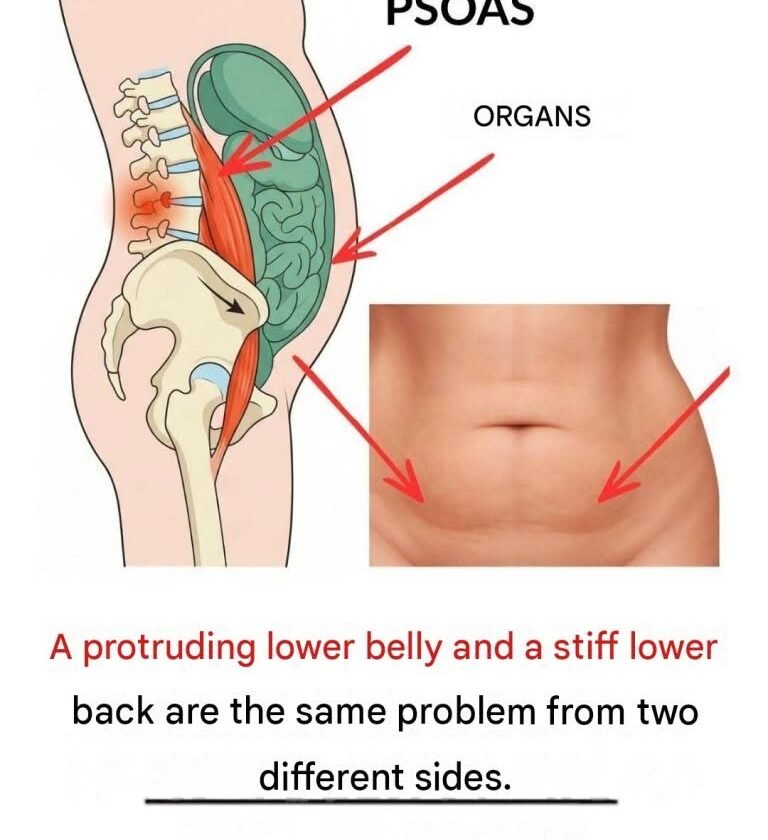
The psoas muscle is a deep muscle that runs from the lower spine through the pelvis to the upper thigh. It helps flex the hip and contributes to movement and stabilization of the lower back.
A tight or irritated psoas can cause lower-back, hip, groin, or pelvic discomfort and stiffness, particularly with certain movements. Psoas syndrome is relatively uncommon, however, so it’s a mistake to assume that a protruding abdomen and stiff back automatically mean the psoas is the problem.
Why might the belly appear to protrude?
A forward-projecting abdomen can have many causes, including:
- Abdominal fat or weight gain
- Normal changes in body composition with age
- Abdominal muscle weakness
- Posture and pelvic positioning
- Bloating or other gastrointestinal issues
A “tight psoas” isn’t established as the single explanation for a protruding belly. Research on posture and low-back pain is also more complicated than many online posts suggest; an association doesn’t prove that a particular posture or muscle is causing the pain.
What can you do?
If your back feels stiff, gentle movement, regular walking, appropriate strengthening, and avoiding prolonged periods in one position can help. Physical therapy can be particularly useful when hip or core weakness, restricted movement, or a specific muscle problem is contributing.
Don’t aggressively “release” or massage the psoas yourself—it lies deep in the abdomen near important structures. If pain or stiffness persists for more than about a week, worsens, or interferes with walking or normal activities, get evaluated rather than assuming it’s a psoas problem.