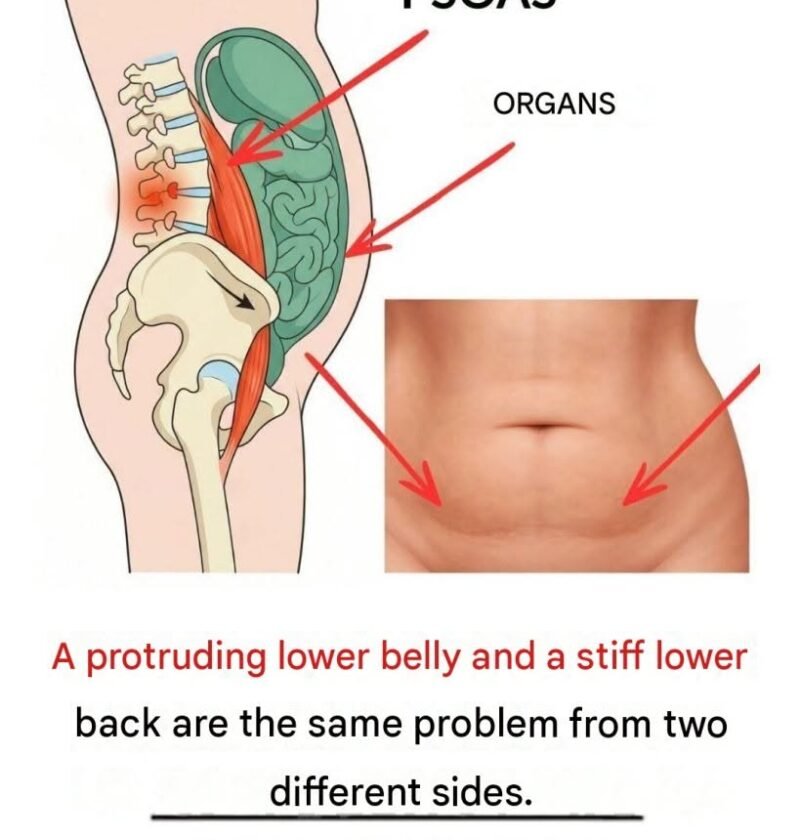
A Protruding Lower Belly and Stiff Lower Back: Could the Psoas Be Involved?
The psoas is a deep hip-flexor muscle that connects the lower spine to the upper thigh. It helps you walk, climb stairs, and bring your thigh toward your torso.
A tight or irritated psoas can contribute to hip or lower-back discomfort and reduced hip mobility, but it’s an oversimplification to say that a protruding belly or stiff back is caused by a “tight psoas.”
Why your belly may protrude
A lower belly can appear more prominent because of many factors, including:
- Body-fat distribution
- Posture and pelvic position
- Abdominal muscle tone
- Bloating or constipation
- Pregnancy or other abdominal changes
- Normal changes in body composition with age
A psoas problem doesn’t directly cause abdominal fat to accumulate.
Signs that the psoas might be contributing to discomfort
You may notice:
- Tightness at the front of the hip
- Discomfort when standing upright after sitting for a long time
- Limited hip extension
- Lower-back or groin discomfort
- Symptoms that worsen with prolonged sitting
These symptoms aren’t specific to the psoas, however. Hip joints, spinal structures, abdominal muscles, and other tissues can produce similar symptoms.
🧘 What can help?
If prolonged sitting contributes to stiffness, regular movement and gentle hip-flexor mobility can be useful. Strengthening the glutes, core, and surrounding hip muscles can also improve overall movement.
Avoid aggressively pressing or “digging into” the psoas—it’s located deep in the abdomen near important blood vessels and organs.
🚨 When to get checked
Seek medical evaluation for severe or persistent back pain, leg weakness or numbness, loss of bladder/bowel control, fever, unexplained weight loss, or sudden severe abdominal pain.
Bottom line: The psoas can contribute to lower-back and hip discomfort, but it isn’t a hidden explanation for every protruding belly. A combination of posture, muscle strength, body composition, and other health factors is usually more relevant.