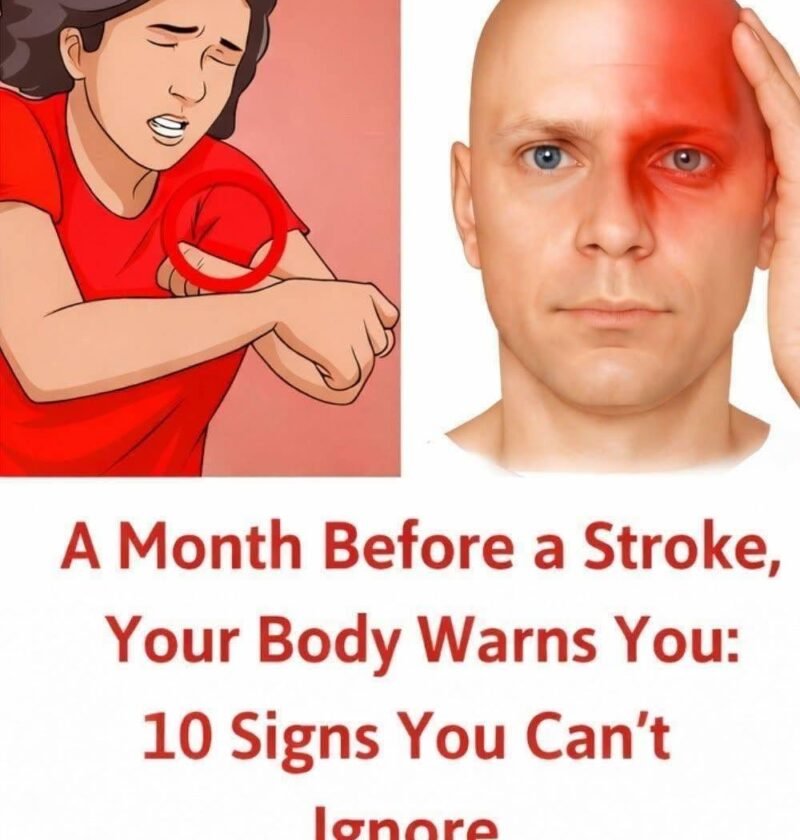
10 Warning Signs People Group Under “Pre-Stroke” Clues
-
Brief one-sided numbness, tingling, or heaviness: A passing “pins-and-needles” feeling or numbness in one arm, leg, or side of the face that clears up after a few minutes.
-
Temporary slurred speech or word trouble: Briefly slurring words, struggling to recall common words, speaking jumbled sentences, or having trouble understanding others.
-
Passing vision shifts or one-sided sight loss: Brief double vision, blurriness, or a temporary dimming or “curtain” over one eye.
-
Sudden unsteadiness, dizziness, or vertigo: An abrupt spinning sensation, loss of balance, or stumbling that appears out of nowhere.
-
Unusual or sudden severe headache: Especially a sharp, abrupt headache—or a sudden change in headache pattern—paired with nausea, dizziness, or neurological changes.
-
Brief episodes of sudden confusion: Moments of feeling foggy, disoriented, or suddenly “off” that aren’t normal for you.
-
Unexpected clumsiness or dropping items: Suddenly dropping a cup, fumbling keys, or noticing one hand or foot feels less coordinated.
-
Transient weakness in an arm or leg: A leg briefly giving way while walking or an arm feeling unexpectedly weak when holding something light.
-
Spells of lightheadedness or near-fainting: Feeling faint or woozy, particularly when tied to blood pressure fluctuations or irregular heart rhythms.
-
Recurring brief neurological “blips”: Any short-lived speech, vision, balance, or sensory glitch that happens more than once over days or weeks. Repeating episodes can signal unstable blood flow ahead of a larger stroke.
How to Judge the Urgency
| Timing & Pattern | What It May Indicate | Recommended Action |
| Sudden symptoms happening right now (weakness, speech issues, vision loss, severe dizziness/headache) | Possible active stroke or TIA—even if mild or starting to improve | Get emergency medical help right away. Note when symptoms began. |
| Brief symptoms earlier today or over past days/weeks that cleared | Possible prior TIA or fluctuating cerebral blood flow | Seek urgent same-day/rapid medical evaluation to assess stroke risk. |
| Slowly building, long-term symptoms (chronic mild tingling, long-standing fatigue or neck stiffness) | Often non-stroke issues (nerve entrapment, sleep, blood pressure, anemia) | Schedule a prompt doctor’s visit for blood pressure, rhythm, metabolic, and vascular checks. |