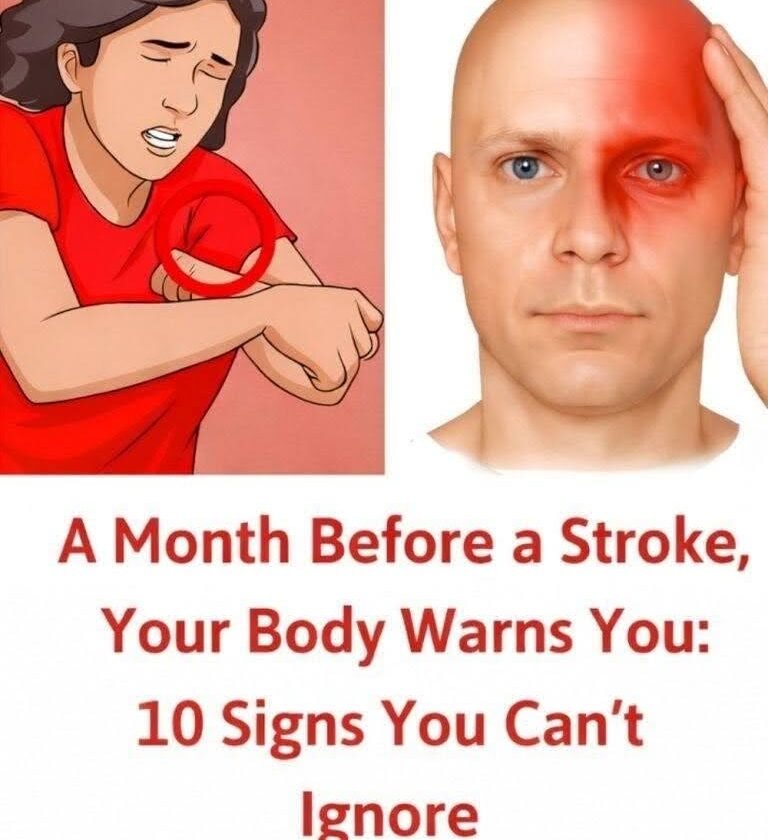
Many viral articles claim that a stroke sends subtle warning signals a full month in advance, such as mild fatigue, headaches, or general body aches. Medically, this is inaccurate and dangerous to rely on.
Most strokes happen suddenly without weeks of advance warning. When early warning signs do appear days or weeks beforehand, they are not vague discomforts—they are Transient Ischemic Attacks (TIAs), often called “mini-strokes.” A TIA causes temporary stroke symptoms that resolve within minutes to a few hours, signaling a high, immediate risk of a major stroke within days or weeks.
Real Early Warning Signs (TIA & Acute Stroke Symptoms)
Whether symptoms last two minutes and fade away (a TIA) or persist, call emergency services immediately. Do not wait to see if they improve.
-
Sudden Face Drooping or Numbness: One side of the face droops, feels numb, or produces an uneven smile.
-
Sudden Arm or Leg Weakness: Sudden weakness, heaviness, or numbness in one arm or leg—especially on only one side of the body.
-
Sudden Speech Difficulty: Slurred speech, trouble finding words, or inability to repeat a simple sentence clearly.
-
Sudden Confusion or Trouble Understanding: Difficulty comprehending what someone is saying, even when they speak plainly.
-
Sudden Vision Changes: Blurred, blackened, or double vision in one or both eyes, or sudden loss of half your visual field.
-
Sudden Loss of Balance or Coordination: Unexplained stumbling, severe dizziness (vertigo), or inability to walk straight.
-
Sudden, Severe Headache (“Thunderclap”): An abrupt, excruciating headache with no known cause—often a hallmark of a hemorrhagic (bleeding) stroke.
-
Sudden Difficulty Swallowing (Dysphagia): Abrupt trouble swallowing saliva, liquids, or food without a sore throat.
-
Temporary Blindness in One Eye (Amaurosis Fugax): A classic TIA warning sign that feels like a dark curtain or shade coming down over one eye before vision returns.
-
Brief Episodes of Any Symptom Above: Even if numbness, slurred speech, or weakness disappears completely after 5 or 10 minutes, it is a medical emergency (TIA). Roughly 1 in 5 people who have a TIA will suffer a major stroke within 90 days—most within the first 48 hours—if untreated.
Use the BE FAST Check
If you suspect a stroke or mini-stroke in yourself or someone else, run through BE FAST:
-
B – Balance: Sudden loss of balance or coordination?
-
E – Eyes: Sudden blurred, double, or lost vision?
-
F – Face: Does one side of the face droop when smiling?
-
A – Arms: Does one arm drift downward when both are raised?
-
S – Speech: Is speech slurred or strange?
-
T – Time: Time to call emergency services immediately—note the exact time symptoms started, as clot-busting treatments must be given within a strict window.
What Actually Happens Weeks Before a Stroke?
Instead of subtle warning symptoms, what builds up silently over months or years are underlying vascular risk factors—such as uncontrolled high blood pressure, atrial fibrillation (irregular heartbeat), high cholesterol, carotid artery narrowing, or unmanaged diabetes. Managing these silent conditions with your doctor is the most reliable way to prevent a stroke before any symptoms ever occur.