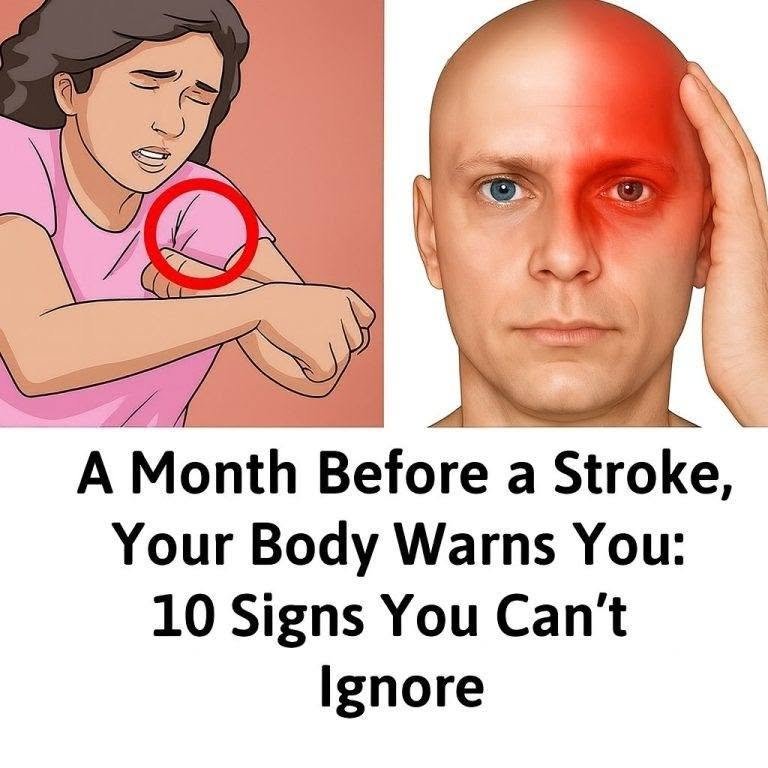
While a major stroke typically strikes with sudden, dramatic intensity, it is true that some individuals experience subtle warning signs or “mini-strokes” (known medically as **Transient Ischemic Attacks or TIAs**) days, weeks, or even up to a month in advance. Recognizing these early red flags can provide a critical window for medical intervention.
### Understanding the “Mini-Stroke” (TIA)
A TIA occurs when blood flow to a part of the brain is temporarily blocked. Because the blockage is brief, the symptoms usually resolve quickly (often within minutes to an hour) and do not cause permanent brain damage on their own. However, **a TIA is a major medical warning sign**—roughly 1 in 3 people who experience a TIA will go on to have a full-blown stroke, often within a year.
### Subtle or Early Warning Signs to Watch For
While acute stroke signs happen abruptly, premonitory or intermittent symptoms leading up to an event can include:
1. **Transient Numbness or Weakness:** Brief episodes of tingling, heaviness, or weakness, particularly affecting just one side of the face, arm, or leg.
2. **Brief Speech Disruptions:** Moments where finding the right word is difficult, speech sounds slightly slurred, or understanding others feels temporarily confusing.
3. **Vision Changes:** Temporary blurring, double vision, or a brief partial loss of sight in one eye.
4. **Unexplained Dizziness or Balance Issues:** Sudden bouts of vertigo, unsteadiness, or feeling as though you cannot walk in a straight line.
5. **Sudden, Severe Headaches:** A sharp, intense headache that differs significantly from normal headaches and has no clear cause.
6. **Unusual Fatigue or Cognitive Fog:** A sudden, profound mental exhaustion or difficulty concentrating that doesn’t improve with rest.
7. **Sudden Mood or Behavioral Shifts:** Uncharacteristic irritability, anxiety, or emotional volatility.
—
### How to Recognize an Active Stroke: The B.E. F.A.S.T. Test
If you or someone around you experiences sudden neurological changes, do not wait to see if they pass. Use the **B.E. F.A.S.T.** mnemonic to spot an active emergency and call emergency services immediately:
* **B – Balance:** Is there a sudden loss of balance or coordination?
* **E – Eyes:** Is there sudden trouble seeing in one or both eyes?
* **F – Face Drooping:** Does one side of the face droop, or is it numb?
* **A – Arm Weakness:** Is one arm weak or numb? Ask the person to raise both arms; does one drift downward?
* **S – Speech Difficulty:** Is speech slurred, are they unable to speak, or do they sound hard to understand?
* **T – Time to Call 911:** If you observe any of these signs, call emergency services right away, even if the symptoms go away.
Are you or someone you know currently experiencing any unusual symptoms like these, or are you looking into this for future prevention?