🦵 Don’t Ignore Leg Cramps at Night: Here’s What You Should Know
Nighttime leg cramps are sudden, involuntary muscle contractions that commonly affect the calves, feet, or thighs. They’re especially common as people get older and are often harmless—but frequent or severe cramps shouldn’t simply be dismissed.
What to do when a cramp happens
Gently stretch the muscle.
For a calf cramp, straighten the leg and gently pull your toes toward your face.
Massage the area.
Rub the cramped muscle gently until it begins to relax.
Stand and walk carefully.
If you’re able to do so safely, putting weight on the affected leg and taking a few slow steps may help.
Apply gentle warmth.
A warm shower or heating pad on a low setting can help relax the muscle. Avoid burns by protecting your skin.
Why do nighttime cramps happen?
Sometimes there’s no identifiable cause. Possible contributors include:
Muscle fatigue or strenuous activity
Prolonged sitting or standing
Dehydration
Pregnancy
Certain medications
Nerve problems
Some circulation or medical conditions
It’s also a misconception that every cramp means you need more potassium or magnesium. Supplements aren’t automatically helpful and can be harmful in excessive amounts.
How to reduce recurring cramps
Stay adequately hydrated.
Stretch your calves gently before bed.
Stay physically active.
Avoid suddenly increasing strenuous exercise.
Review your medications with a healthcare professional if cramps began after starting or changing a medicine.
🚨 When should you get medical help?
Contact a healthcare professional if cramps are frequent, severe, worsening, or repeatedly disrupting your sleep, or if they occur with persistent weakness, numbness, or pain.
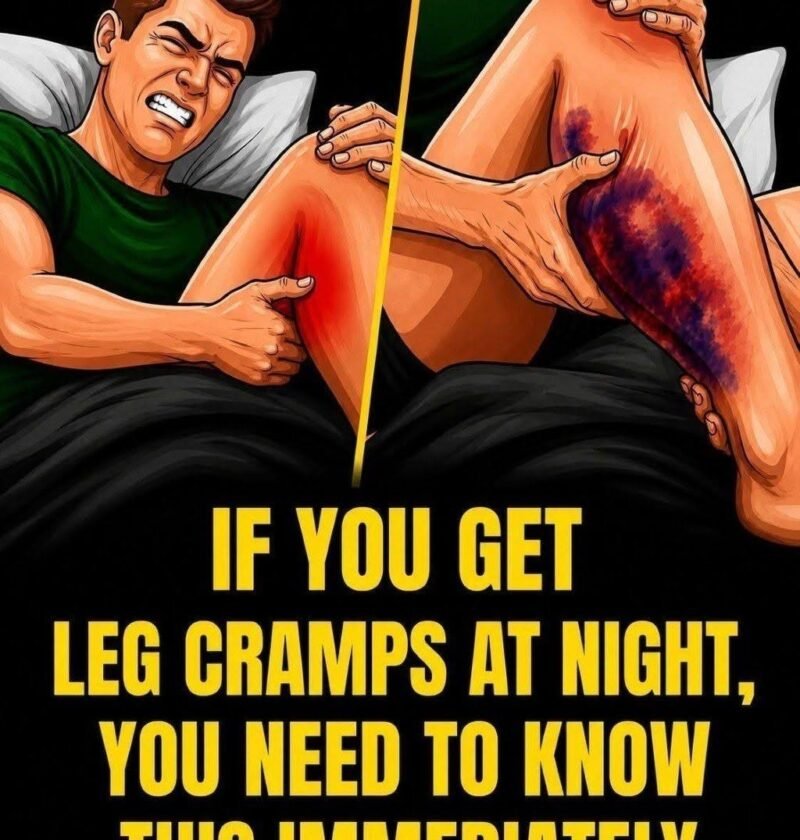
Get urgent medical attention if one leg suddenly becomes swollen, warm, red, and painful, particularly if you also develop chest pain or shortness of breath. Those symptoms can indicate a blood clot rather than an ordinary muscle cramp.
Bottom line: Most nighttime leg cramps aren’t dangerous, but recurring cramps deserve attention. Gentle stretching, massage, appropriate hydration, and reviewing possible causes are safer approaches than automatically taking supplements.