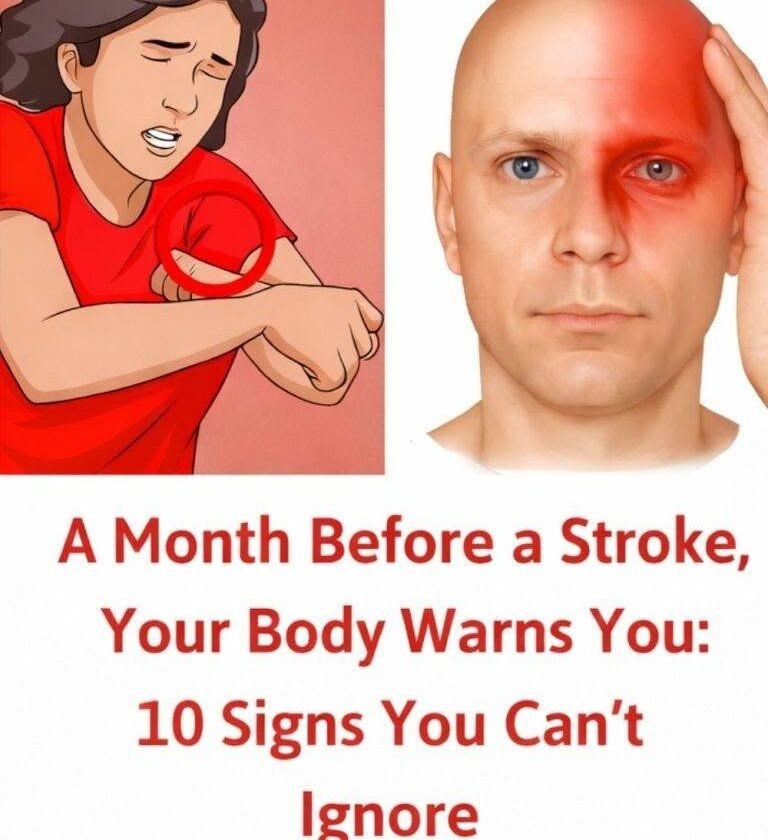
A Month Before a Stroke, Does Your Body Warn You? 10 Signs Not to Ignore
You may see claims that the body gives 10 specific warnings exactly one month before a stroke. There is no medically established checklist that reliably predicts a stroke one month in advance.
However, some people experience a transient ischemic attack (TIA) before an ischemic stroke. A TIA can cause temporary stroke-like symptoms and should be treated as a medical emergency.
10 symptoms you should never ignore
Sudden weakness or numbness in the face, arm, or leg—especially on one side.
Facial drooping, particularly on one side.
Sudden difficulty speaking or finding words.
Sudden trouble understanding what someone is saying.
Sudden vision loss or major vision changes in one or both eyes.
Sudden dizziness or loss of balance.
Sudden difficulty walking or coordinating movements.
Sudden confusion or disorientation.
Sudden severe headache with no known cause, especially if it is accompanied by neurological symptoms.
Sudden difficulty swallowing, particularly when it occurs together with other neurological symptoms.
🚨 Don’t wait for symptoms to disappear
Stroke and TIA symptoms typically start suddenly. Even if they completely disappear after a few minutes, don’t assume everything is fine. A TIA can signal a significant risk of a future stroke and needs urgent assessment.
Remember BE FAST:
B — Balance: sudden loss of balance
E — Eyes: sudden vision changes
F — Face: facial drooping
A — Arms: arm weakness or numbness
S — Speech: speech difficulty
T — Time: call emergency medical services immediately
If any of these symptoms are happening right now, seek emergency medical help immediately. Note when the symptoms began—or the last time the person was known to be well—because timing can be important for treatment.
Prevention matters more than a “one-month warning”
The strongest ways to reduce stroke risk include controlling high blood pressure, managing diabetes and cholesterol, avoiding tobacco, staying physically active, maintaining a healthy diet, and treating conditions such as atrial fibrillation when present.
Bottom line: Don’t rely on a “one month before stroke” list. A stroke can occur without warning, and any sudden neurological change deserves immediate attention.