I’d change “Be your own dentist” because hardened tartar (calculus) generally can’t be safely removed at home with household tools. Trying to scrape it off can injure the gums or damage the tooth surface.
Here’s a safer, useful version:
Writing
🦷 Tartar Buildup? What You Can Safely Do at Home
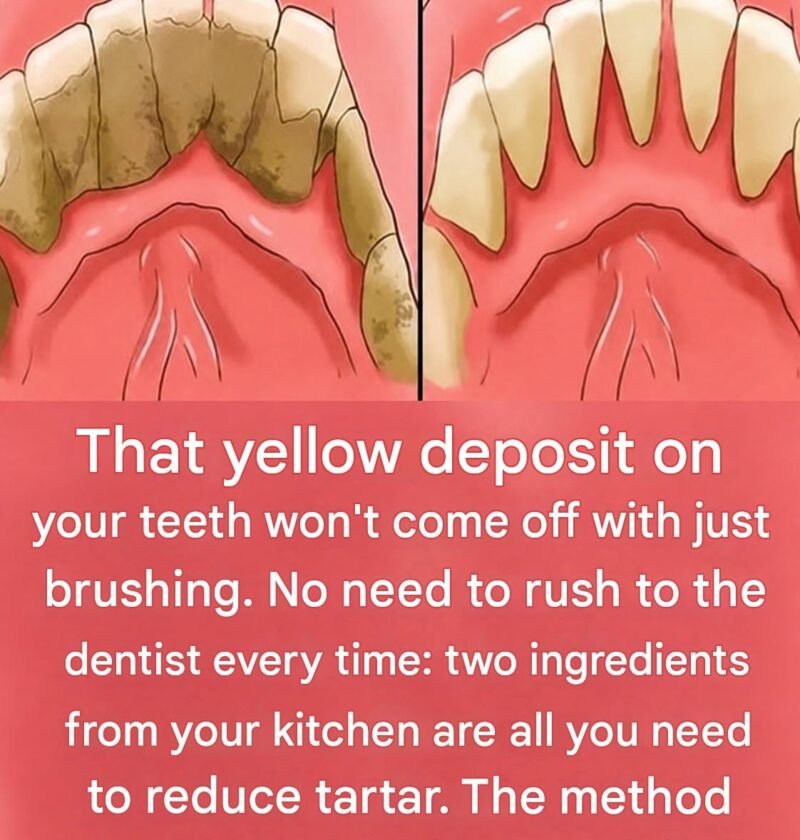
Tartar—also called dental calculus—is hardened plaque. Once plaque mineralizes, a toothbrush usually can’t remove it completely.
What you can do at home
1. Brush twice a day
Use a soft-bristled toothbrush and fluoride toothpaste for about two minutes each time. Concentrate gently along the gumline.
2. Clean between your teeth daily
Use dental floss or interdental brushes to remove plaque from places your toothbrush can’t reach.
3. Consider an electric toothbrush
A good powered toothbrush can make plaque removal easier, particularly if you have difficulty brushing effectively by hand.
4. Reduce frequent sugary snacks and drinks
Frequent sugar exposure encourages plaque bacteria and increases the risk of cavities.
5. Don’t scrape tartar yourself
Avoid knives, needles, metal dental picks, or other sharp objects. DIY scraping can cause gum injuries, enamel damage, infection, or accidental injury.
🪥 What actually removes hardened tartar?
A dentist or dental hygienist can professionally remove calculus using appropriate instruments. Regular professional cleanings can also help prevent heavy buildup.
🚨 See a dentist if you notice:
Bleeding or swollen gums
Persistent bad breath
Loose or sensitive teeth
Gum recession
Pain or swelling
Heavy yellow/brown deposits that don’t brush away
Bottom line: You can control and prevent plaque at home, but once plaque has hardened into tartar, professional cleaning is the safest way to remove it. You don’t need to be your own dentist—you just need a good daily oral-care routine.