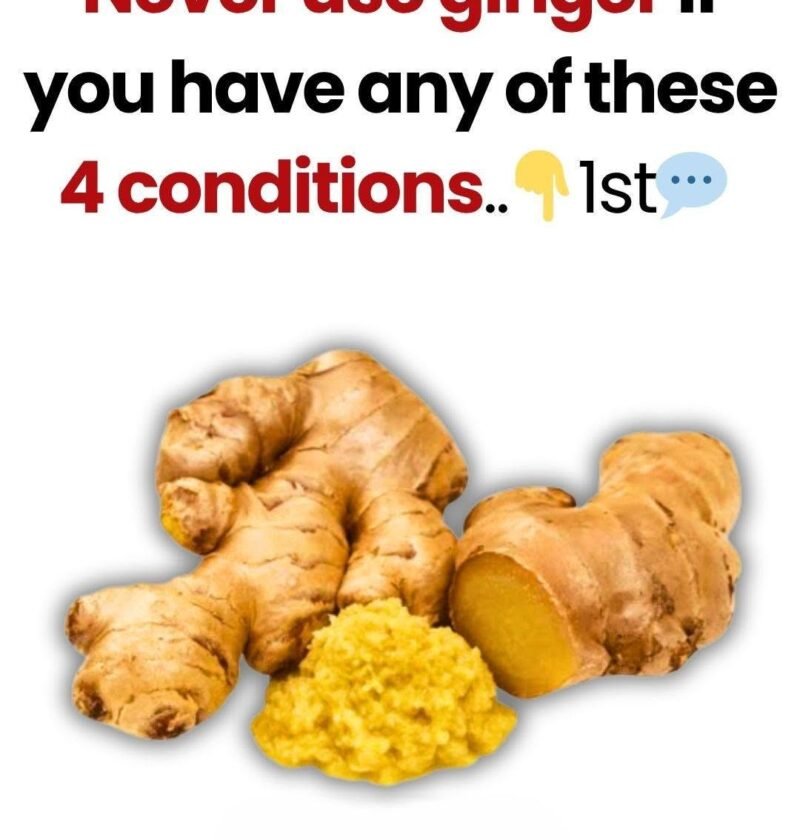
Ginger is Healthy for Most People — But Not for Everyone
Ginger is widely celebrated for its powerful anti-inflammatory, digestive-soothing, and immune-boosting properties. From easing nausea to calming muscle soreness, it is a staple in natural health and cooking.
However, because ginger is biologically active and acts as a natural stimulant to the circulatory and digestive systems, it is not suitable for everyone. Certain health conditions require caution or total avoidance.
Here are 4 conditions where ginger can do more harm than good, along with a medical explanation for why:
1. Bleeding Disorders or Those on Blood Thinners
-
The Explanation: Ginger naturally contains compounds (such as salicylates) that act as mild blood thinners by inhibiting platelet aggregation—the process that helps blood clot.
-
The Risk: If you have a bleeding disorder (like hemophilia) or take anticoagulant or antiplatelet medications (such as Warfarin, Aspirin, or Plavix), consuming high amounts of ginger can increase your risk of bruising, prolonged bleeding, or internal hemorrhaging.
2. Gallbladder Disease or Active Gallstones
-
The Explanation: Ginger stimulates the production and release of bile from the gallbladder to aid in digestion.
-
The Risk: If you have gallstones or a sluggish gallbladder, this forced surge of bile can cause the gallbladder to contract forcefully against an obstruction (a trapped stone), triggering a painful and dangerous gallbladder attack.
3. Chronically Low Blood Pressure (Hypotension)
-
The Explanation: Ginger has natural vasodilating properties, meaning it helps relax and open up blood vessels to improve overall circulation.
-
The Risk: While great for people with high blood pressure, this effect can cause blood pressure to drop too low in individuals who already struggle with hypotension, leading to dizziness, lightheadedness, weakness, or fainting spells.
4. Severe Acid Reflux or GERD (During Active Flares)
-
The Explanation: While ginger is often praised for soothing general digestion, its active compound, gingerol, can relax the lower esophageal sphincter (LES)—the muscular valve that keeps stomach contents from rising.
-
The Risk: If you suffer from severe acid reflux or Gastroesophageal Reflux Disease (GERD), a relaxed LES can allow stomach acid to splash back up into the esophagus much more easily, worsening heartburn during an active flare.
Doctor’s Note: Enjoying a cup of fresh ginger tea or adding a small slice to your cooking is generally safe for healthy individuals. However, if you are managing chronic health conditions or taking daily medications, it is always wise to consult your physician before taking concentrated ginger supplements.
Do you or someone you know use ginger regularly for health reasons, or do you take any medications that might interact with it?