Finding a sweet, perfectly ripe watermelon doesn’t have to be a guessing game. Instead of relying on luck, you can look for specific physical indicators that nature leaves behind on the rind.
Here is your foolproof visual guide to picking the sweetest watermelon at the market:
1. Check the Field Patch (The Ground Spot)
-
What to look for: A creamy, deep yellow or even buttery-orange splotch on the bottom of the melon.
-
Why it works: This is where the watermelon rested on the ground while ripening in the sun. A deep yellow or orange patch means the melon spent ample time on the vine developing its sugars. Avoid watermelons with white or pale green spots, as they were picked too early.
2. Look for Webbing and Scars (Sugar Spots)
-
What to look for: Dark, web-like brown scarring or rough, corky patches on the rind.
-
Why it works: These web-like patterns—often called “sugar spots”—happen when bees repeatedly pollinate the flower parts that form the fruit. The more pollination, the sweeter the watermelon.
3. Inspect the Color and Finish
-
What to look for: A dull, deep green appearance rather than a shiny or bright green finish.
-
Why it works: A shiny rind usually indicates an unripe watermelon. A dull, matte finish is a strong sign that the fruit is ripe, sweet, and ready to eat.
4. Check the Tail (The Stem)
-
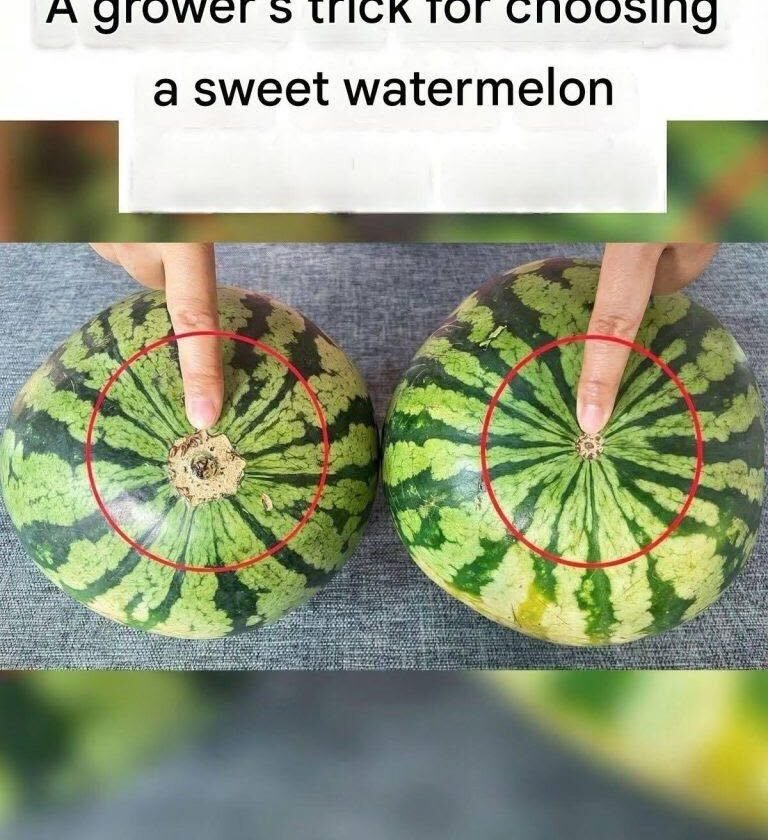
What to look for: A dry, yellowish-brown stem rather than a green one.
-
Why it works: A green stem means the watermelon was harvested prematurely and won’t ripen further off the vine. A dried, brown stem indicates it was picked at peak ripeness.
Bonus Tip (The Knock Test): Give the watermelon a gentle thump with your knuckles. A ripe, sugar-filled watermelon will produce a deep, hollow, resonant sound (like a tenor drum). If it sounds dull or thudding, it may be underripe or overripe/mealy.
Do you usually prefer your watermelon chilled straight from the fridge, or do you like to sprinkle