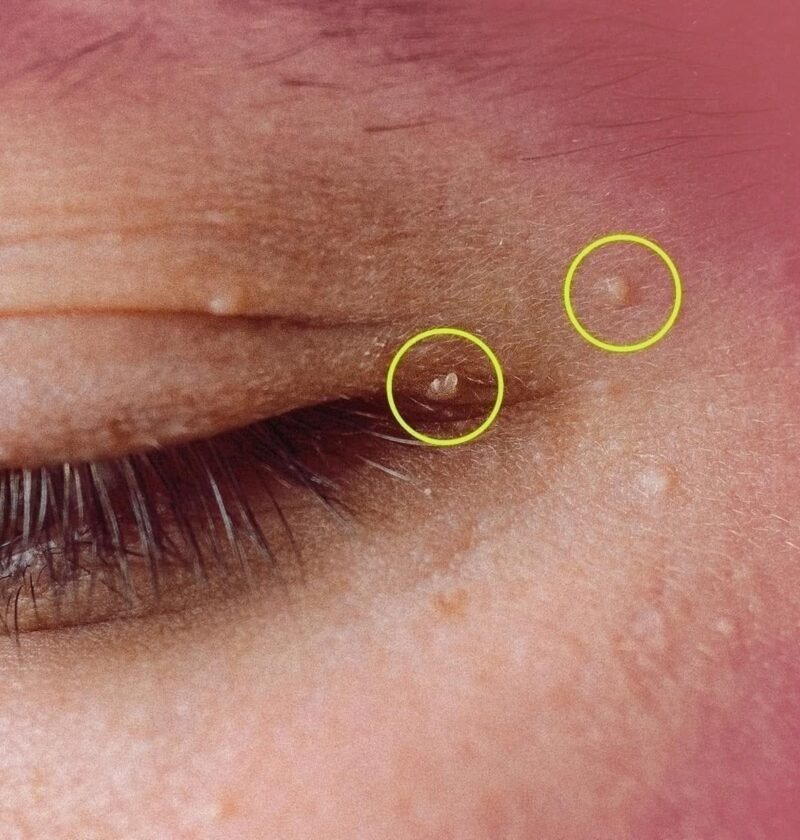
How to Get Rid of Milia: Those Tiny “Fat Cysts”
First, a clarification: milia aren’t fat cysts. They’re tiny, firm cysts filled primarily with keratin, a protein found in the outer layer of skin. They commonly appear as white or pearly bumps around the eyes, cheeks, nose, or forehead. They’re generally harmless.
What actually works
1. Leave them alone.
Many milia disappear on their own over weeks to months, so treatment isn’t medically necessary unless they’re bothering you cosmetically.
2. Gentle skincare.
Wash with a mild cleanser, avoid harsh scrubbing, and use sunscreen. Gentle exfoliation may help some adults, but results aren’t immediate.
3. Retinoids may help.
Products containing retinoids such as adapalene or prescription tretinoin can promote skin-cell turnover and may help with persistent milia. They aren’t appropriate for everyone, so ask a healthcare professional before using them, particularly around the eyes.
4. Professional extraction is the quickest option.
A dermatologist or other qualified clinician can make a tiny opening and remove the keratin safely. Other professional treatments, such as cryotherapy or laser procedures, may be appropriate in selected cases.
🚫 Don’t pop them yourself
Milia aren’t ordinary pimples. Squeezing, digging, or piercing them at home can cause infection, inflammation, and permanent scarring, particularly around the delicate skin of the eyes.
Also be cautious with viral recipes involving baking soda, lemon juice, vinegar, toothpaste, or harsh scrubs. Irritating the skin won’t reliably remove a milium and can leave you with a bigger skin problem.
When to get it checked
If you’re not certain that a bump is milia, have a dermatologist examine it—especially if it’s changing, bleeding, painful, rapidly growing, or unusual-looking. Several other skin conditions can resemble tiny white bumps.