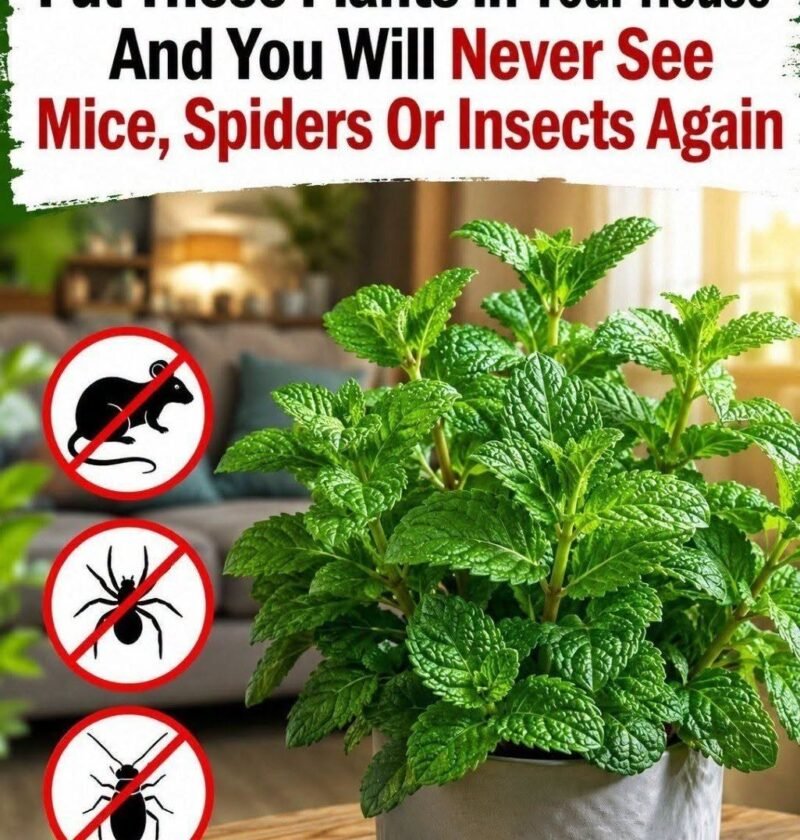
Yes—some plants contain aromatic compounds that may discourage certain insects, but the claim that eight plants will reliably keep mice, spiders, mosquitoes, and other pests away is overstated. Plants alone rarely provide complete pest control.
🌿 8 plants commonly used for pest deterrence
Lavender — Its strong fragrance may help discourage some mosquitoes and moths. It’s also attractive to pollinators.
Basil — Its aroma may have some mosquito-repelling effects, although simply growing basil around a patio isn’t a reliable substitute for mosquito control.
Mint — Strong-smelling mint is often suggested for insects and rodents. Keep it in containers, because it can spread aggressively through a garden.
Rosemary — Its aromatic oils may repel or deter some insects, particularly when the foliage is disturbed or crushed.
Lemongrass — Contains citronellal, a compound associated with mosquito repellency. However, growing the plant isn’t equivalent to using a concentrated, tested repellent.
Marigolds — Their scent is traditionally used in gardens to discourage certain pests, although evidence for broad pest control from simply planting marigolds is limited.
Catnip — Contains nepetalactone, which has demonstrated mosquito-repellent activity in laboratory research. Be aware that it can attract cats.
Sage — Its aromatic foliage may discourage some insects, and dried or burned sage is sometimes used outdoors, although smoke isn’t an appropriate pest-control strategy indoors.
🐭 What about mice and spiders?
This is where viral posts often exaggerate things.
Putting mint or other plants around your house is unlikely to eliminate a mouse infestation. Mice are primarily looking for food, water, shelter, and access points. Sealing holes and removing food sources are much more effective.
Similarly, plants won’t reliably eliminate spiders. Reducing insects around your home, removing webs, and sealing gaps around doors and windows can be more effective.
A better strategy
Think of plants as an optional supplement, not your primary pest-control method:
Keep food sealed and clean up crumbs.
Remove standing water to reduce mosquitoes.
Repair screens and seal cracks and gaps.
Keep vegetation trimmed away from the house.
Remove clutter where rodents or insects can hide.
And remember: “natural” doesn’t automatically mean safe. Some plants are toxic to pets or children, and concentrated essential oils can be harmful if swallowed or applied improperly.
Bottom line: Lavender, mint, rosemary, basil, lemongrass, marigolds, catnip, and sage can make a garden smell wonderful and may provide some localized insect deterrence, but no plant will reliably make mice, spiders, mosquitoes, and other pests disappear.