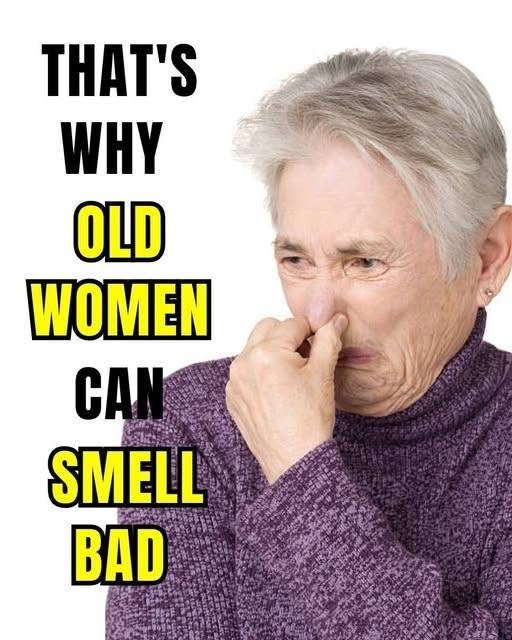
8 “Hidden” Habits That Can Contribute to Unpleasant Odor in Older Women
First, a gentle correction: body odor isn’t a sign that someone is dirty, and aging itself doesn’t mean a person should smell bad. Odor can result from sweat mixing with skin bacteria, medications, hormonal changes, oral problems, infections, or other health conditions.
Here are eight commonly overlooked contributors:
- Not drying skin folds completely
Moisture trapped beneath the breasts, abdomen, groin or between the thighs can encourage bacterial or fungal growth and produce odor. - Wearing the same clothing or underwear repeatedly
Sweat and skin bacteria can remain in fabric even when the clothing doesn’t look dirty. - Overlooking dentures and oral hygiene
Dentures, gum disease, cavities and dry mouth can contribute to persistent bad breath. Dry mouth becomes more common with age and can be caused by many medications. - Not drinking enough fluids
Dehydration can contribute to dry mouth and may make urine more concentrated and stronger-smelling. - Ignoring urinary leakage
Even small amounts of urine left on clothing or skin can cause odor and irritation. Incontinence is more common in older adults and can have many treatable causes. - Taking medications without considering side effects
Some medicines can cause dry mouth, increased sweating, or urinary problems, all of which can indirectly affect odor. Don’t stop prescribed medication on your own; ask a clinician or pharmacist about alternatives. - Overlooking menopause-related changes
Hormonal fluctuations and night sweats during menopause can increase sweating and alter body odor. - Assuming a new odor is “just aging”
A sudden or persistent change deserves attention. Certain odors can sometimes accompany medical problems, including diabetes, kidney or liver disease, or infection.
🚩 When to get checked
If odor changes suddenly, persists despite normal hygiene, or comes with fever, skin redness/rashes, wounds, unusual vaginal discharge, painful urination, unexplained sweating, or a fruity/chemical-like odor, speak with a healthcare professional.