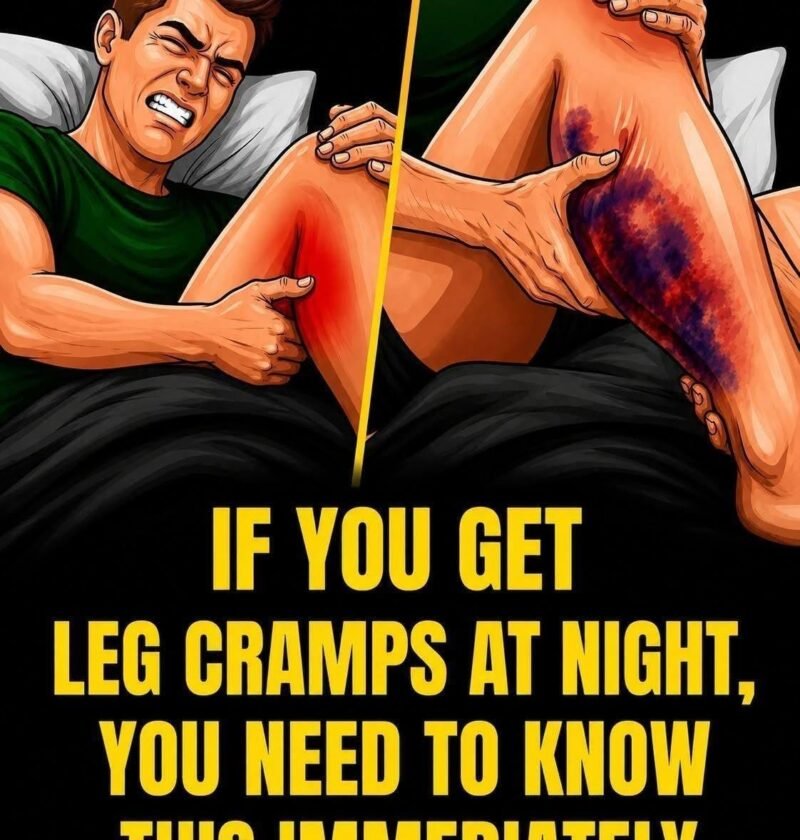
🦵 If You Get Leg Cramps at Night, Know These Things
Nighttime leg cramps are sudden, involuntary tightening of a muscle—often in the calf or foot. They’re common, especially with increasing age, and are usually harmless, but recurrent cramps can sometimes have an underlying cause.
What to do when a cramp strikes
-
Gently stretch the muscle. For a calf cramp, straighten your leg and slowly pull your toes toward your face.
-
Massage the cramped muscle gently.
-
Stand up and walk carefully if you’re able to do so safely.
-
Apply warmth with a warm shower or heating pad; some people find cold helpful afterward if the muscle remains sore.
Why might they happen?
Possible contributors include:
-
Muscle fatigue or prolonged activity
-
Prolonged sitting or standing
-
Dehydration
-
Pregnancy
-
Certain medications, including some diuretics and statins
-
Nerve or circulation problems
-
Electrolyte abnormalities
-
Some underlying medical conditions
Despite common online claims, most nighttime leg cramps aren’t simply caused by a magnesium deficiency. Taking magnesium supplements doesn’t reliably prevent ordinary nocturnal leg cramps unless a deficiency or another specific indication is present.
🚨 When to get medical advice
See a healthcare professional if cramps are frequent, severe, newly developing, disturbing your sleep, or accompanied by muscle weakness, numbness, or swelling.
Get urgent medical attention if one leg suddenly becomes swollen, warm, red, and painful, particularly if you also develop chest pain or shortness of breath.
Bottom line: Stretching and gentle massage are reasonable first steps during a cramp. If they’re happening repeatedly, don’t assume you simply need electrolytes—look for the underlying cause.