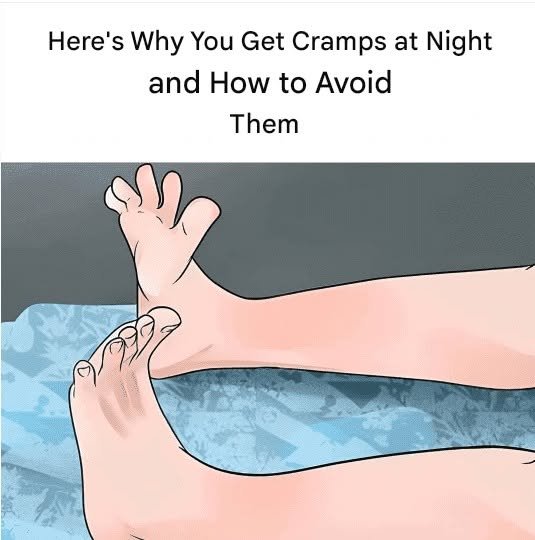
Common contributors
- Muscle fatigue or overuse
- Dehydration
- Sitting or standing in one position for long periods
- Certain medications, including some diuretics and blood-pressure medicines
- Problems affecting nerves, blood flow, the thyroid, kidneys, or metabolism
- Sometimes low levels of minerals such as potassium, calcium, or magnesium can contribute.
🦵 What to do when a cramp strikes
- Straighten the affected leg.
- Pull your toes toward your face to stretch the calf.
- Gently massage the cramped muscle.
- If you can safely stand, put weight on the affected leg and walk slowly.
- Heat or a warm shower may help relax the muscle.
How to reduce nighttime cramps
Try gentle calf and hamstring stretching before bed, stay adequately hydrated during the day, and consider a few minutes of light exercise before bedtime. Evidence for stretching is limited, but some research suggests it may reduce the severity of nighttime cramps in older adults.
Don’t automatically take magnesium or potassium. Magnesium supplements generally haven’t shown meaningful benefit for ordinary nighttime cramps in older adults, and unnecessary mineral supplementation can cause problems.
🚩 When to get checked
See a healthcare professional if cramps are frequent, severe, causing significant sleep disruption, accompanied by weakness, swelling, redness or skin changes, or aren’t improving with self-care.
So, despite viral claims, there isn’t one magical vitamin or food responsible for nighttime cramps. The cause is often multifactorial—and sometimes simply isn’t identifiable.