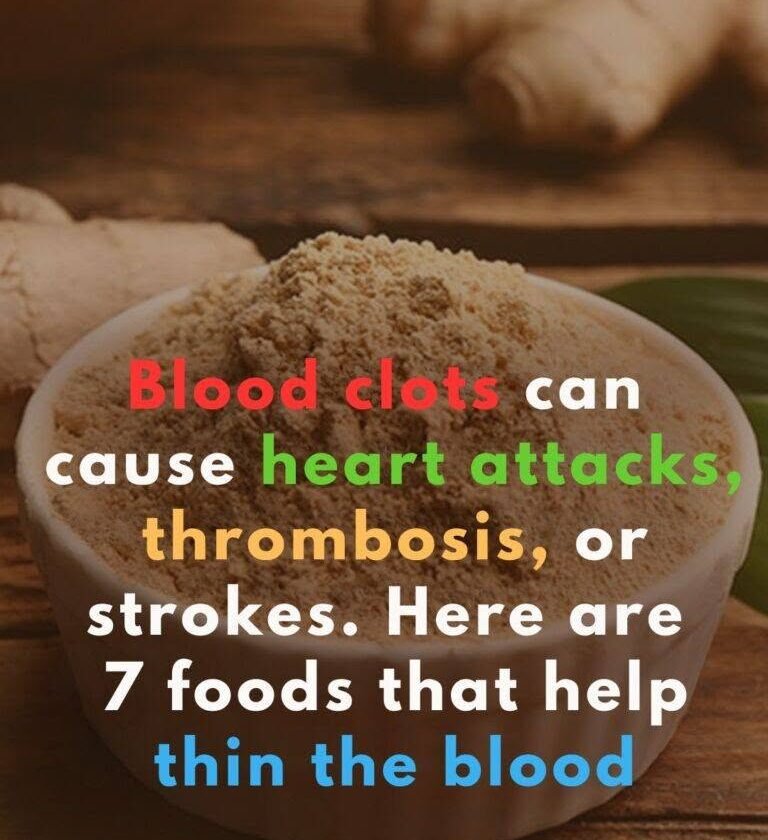
7 foods commonly discussed
- Garlic — Garlic compounds may affect platelet aggregation. Garlic supplements can increase bleeding risk, particularly alongside anticoagulants or aspirin.
- Ginger — Gingerols may have mild antiplatelet effects, although evidence in humans is mixed and ordinary dietary amounts don’t reliably act as an anticoagulant.
- Turmeric — Curcumin has been investigated for effects on platelet function, but it shouldn’t be considered a replacement for prescribed blood thinners. Concentrated supplements deserve particular caution.
- Fatty fish — Fish provides omega-3 fatty acids, which can influence platelet function. This doesn’t mean eating fish will “thin” your blood enough to treat or prevent a clot.
- Green tea — It contains compounds that may affect coagulation, and it can be relevant to people taking warfarin.
- Cranberries — Cranberry products have historically been suspected of interacting with warfarin, although newer evidence suggests moderate cranberry juice consumption is probably safe for many people taking warfarin.
- Foods containing vitamin E, such as nuts and seeds — Vitamin E can have antiplatelet effects, particularly at supplemental doses. Food amounts shouldn’t be treated as medication.
⚠️ The important exception: warfarin
If you take warfarin, don’t suddenly start eating large amounts of “blood-thinning” foods or dramatically change your diet.
In particular, leafy green vegetables such as spinach, kale and broccoli are rich in vitamin K, which can reduce warfarin’s effect. You generally don’t need to avoid them—the key is keeping your vitamin-K intake reasonably consistent from day to day.
And don’t stop or reduce a prescribed anticoagulant because of something you read about a food. Foods cannot substitute for anticoagulant treatment when that treatment is medically necessary.
If you’d like, I can also give you 7 everyday foods that may support healthy circulation, plus which foods to avoid or limit if you’re taking aspirin, warfarin, apixaban (Eliquis), or rivaroxaban (Xarelto).