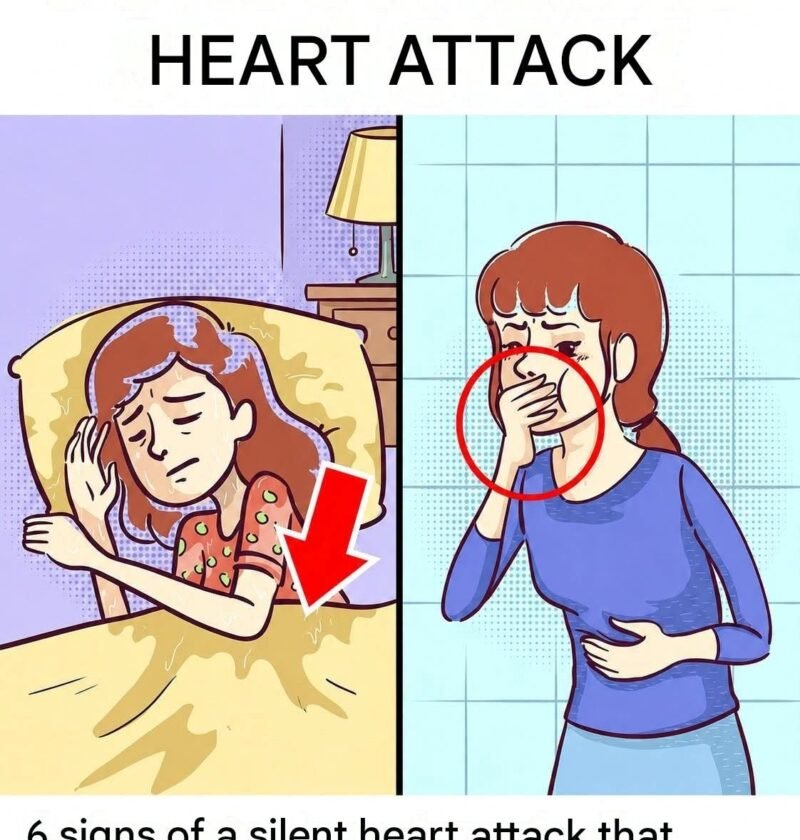
Unlike the dramatic, crushing chest pain often shown in movies, a silent heart attack (medically known as a silent myocardial infarction or SMI) occurs with little to no obvious warning. In fact, research suggests that up to nearly half of all heart attacks are silent, meaning the heart muscle is starved of oxygen and damaged without the person ever realizing they are having a cardiac event at the time.
Seniors and older adults are especially prone to atypical symptoms because aging changes how the nervous system perceives and transmits pain signals. Recognizing these six subtle, frequently overlooked signs can be life-saving:
1. Unusual, Unexplained Fatigue
-
What it feels like: A sudden, crushing exhaustion that hits out of nowhere, making you feel completely drained even after a full night’s sleep. You might find yourself unable to perform simple daily routines, like climbing a single flight of stairs or walking to the mailbox, without needing to sit down and rest.
-
Why it happens: When the heart’s pumping efficiency drops due to a blocked coronary artery, blood flow to the rest of the body decreases sharply, leaving muscles and organs starved of oxygen.
2. Mild Discomfort or Pressure in the Chest, Jaw, Neck, or Back
-
What it feels like: Instead of sharp chest pain, you might feel a strange pressure, fullness, tightness, or a dull ache. Crucially, this discomfort doesn’t always stay in the chest—it can radiate upward into the jaw, teeth, neck, upper back, or down one or both arms.
-
Why it happens: Cardiac nerve pathways share neurological tracks with the jaw, neck, and arms. When the heart suffers ischemia (oxygen deprivation), the brain can misinterpret where the pain is originating.
3. Sudden Shortness of Breath (Dyspnea)
-
What it feels like: Feeling winded or struggling to catch your breath while doing very little—such as sitting in a chair, talking, or performing light household tasks—when you would normally have no trouble breathing.
-
Why it happens: If the heart muscle cannot pump blood effectively, fluid can back up into the lungs, creating a sensation similar to suffocating or drowning, even without classic chest pain.
4. Cold Sweats (Diaphoresis)
-
What it feels like: Suddenly breaking out in a cold, clammy sweat for no apparent reason, or feeling chilled and damp while sitting in a comfortable room.
-
Why it happens: A silent heart attack triggers the body’s “fight or flight” autonomic nervous system response due to physical stress and oxygen distress, causing sudden sweating even when body temperature is normal.
5. Sudden Lightheadedness, Dizziness, or Fainting
-
What it feels like: A sudden wave of dizziness, unsteadiness, or feeling like you might pass out upon standing up or during normal activity.
-
Why it happens: A sudden drop in cardiac output reduces blood pressure and starves the brain of adequate oxygenated blood, leading to lightheadedness or syncope.
6. Indigestion, Nausea, or Heartburn-Like Discomfort
-
What it feels like: A sudden onset of mild nausea, an upset stomach, or a burning sensation in the upper abdomen that feels like severe indigestion or acid reflux—especially if it happens while resting.
-
Why it happens: The inferior wall of the heart sits very close to the diaphragm and stomach. When it experiences a lack of blood flow, the resulting nerve signals can easily mimic severe digestive distress.
What To Do If You Suspect a Silent Heart Attack
If you or a loved one experience any of these unusual, persistent symptoms—especially if they come on suddenly or occur in combination (such as fatigue paired with shortness of breath or a cold sweat)—do not wait to see if they pass. Call emergency services immediately. An electrocardiogram (ECG) and blood tests at a hospital are the only definitive ways to confirm whether heart muscle damage has occurred.