Which Banana Is Healthiest: Green, Yellow, or Brown?
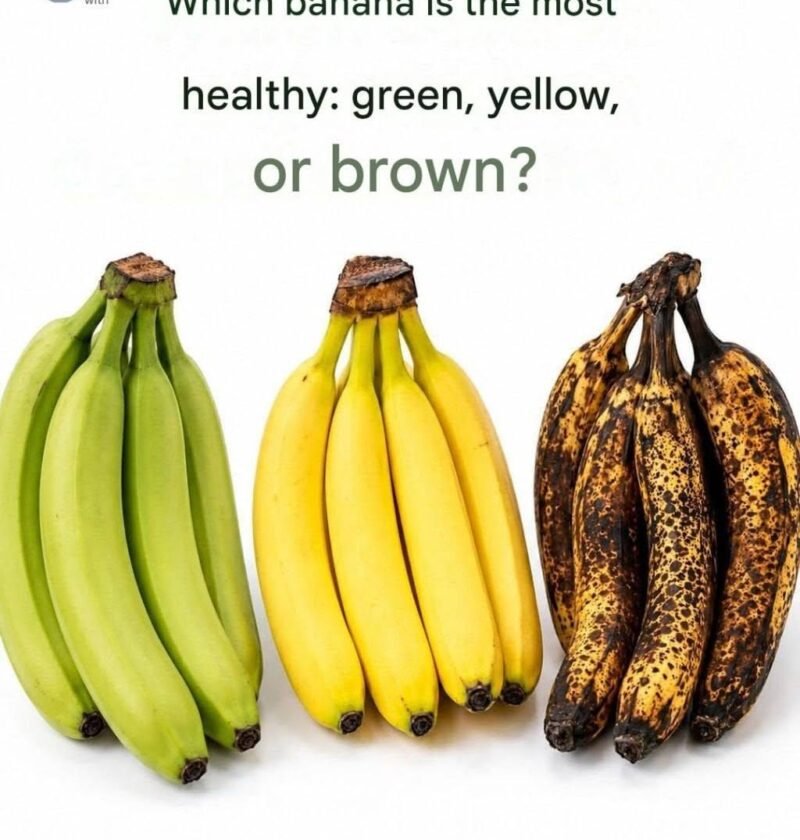
There isn’t one universally “healthiest” banana. The best choice depends on what you’re looking for. As bananas ripen, their starch is converted into sugars, while their texture and sweetness change.
🟢 Green banana — best for resistant starch
Green, unripe bananas contain considerably more resistant starch, a carbohydrate that isn’t digested like ordinary starch and can support beneficial gut bacteria.
Best if: you’re looking for a less-sweet banana and more resistant starch.
🟡 Yellow banana — best all-around choice
A yellow banana is ripe, naturally sweet and easy to digest, while still providing potassium, fiber and other nutrients.
Best if: you want a convenient, balanced everyday fruit.
🟤 Brown-spotted banana — sweeter and softer
As bananas become very ripe, more of their starch is converted into simple sugars. They’re therefore sweeter and softer, but they’re not “bad” or devoid of nutrients.
Best if: you want a naturally sweet banana for oatmeal, smoothies or baking.
🏆 So which should you choose?
| Ripeness | Main advantage |
|---|---|
| 🟢 Green | More resistant starch |
| 🟡 Yellow | Best everyday balance |
| 🟤 Brown-spotted | Sweeter and easier to mash |
Bottom line: For most people, a yellow banana is an excellent everyday choice. If you’re particularly interested in resistant starch and gut health, a greener banana has an advantage. If you simply prefer a sweet, soft banana, brown spots are perfectly fine.
And despite the common internet claim, a brown banana isn’t “full of sugar” in a way that makes it unhealthy—ripeness changes the form of its carbohydrates more than it changes the overall nutritional value.