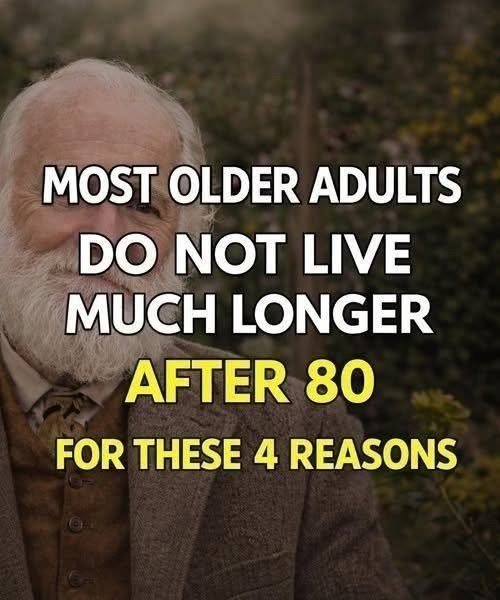
“Most Older Adults Don’t Live Much Past 80” — Is That Really True?
Not quite. This is another headline that turns a population statistic into a prediction about an individual.
In the U.S., the latest CDC data show that life expectancy at birth was 79.0 years in 2024, but that does not mean most people die shortly after turning 80. Someone who has already reached 65 has, on average, another 19.7 years of life expectancy—to roughly age 85. (CDC)
Why do health risks increase with age?
Four major factors contribute to declining health and mortality in later life:
1. Heart and blood-vessel disease ❤️
Heart disease remains the leading cause of death in the U.S., with stroke also among the leading causes in older adults. (CDC)
2. Cancer
Cancer is the second-leading cause of death overall. Risk generally increases with age, which is why appropriate screening and attention to new symptoms matter. (CDC)
3. Loss of muscle and physical function 🦵
Muscle strength and physical function can decline with age, but inactivity accelerates this process. Regular aerobic, strength and balance activities can help preserve independence and reduce disease risk. (National Institute on Aging)
4. Chronic diseases and falls
Diabetes, kidney disease, chronic lung disease, dementia and unintentional injuries become increasingly important health concerns in older adults. (CDC)
The good news
Age itself isn’t a sentence. The National Institute on Aging emphasizes that staying physically active, eating well, getting adequate sleep, avoiding tobacco, limiting alcohol and managing health conditions can support healthier aging. (National Institute on Aging)
And it’s never too late to become more active. Physical activity in older adults is associated with lower risks of cardiovascular disease, diabetes, some cancers and dementia. (National Institute on Aging)
Bottom line
The claim that “most older adults don’t live much past 80” is an oversimplification. Many people live well into their 80s and 90s, and some reach 100. Rather than focusing on a particular age cutoff, the more useful goal is to preserve heart health, muscle strength, mobility, cognition and independence for as many years as possible.