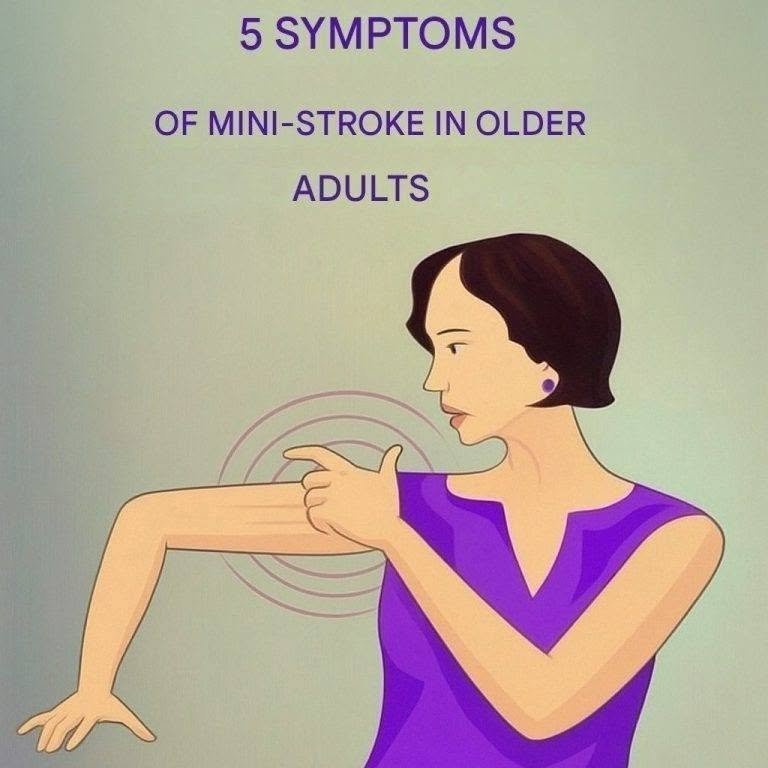
5 Symptoms of a Mini-Stroke in Seniors That Shouldn’t Be Ignored
A “mini-stroke” is commonly used to describe a transient ischemic attack (TIA). A TIA occurs when blood flow to part of the brain is temporarily interrupted. Its symptoms can disappear after minutes or hours, but that does not mean the event is harmless. A TIA is a warning that a potentially disabling stroke may follow and requires urgent medical assessment.
1. Sudden weakness or numbness on one side
One of the classic warning signs is sudden numbness, weakness, or loss of movement affecting the face, arm, or leg—particularly on one side.
For example, an older adult may suddenly find that one arm feels weak or that one side of the face appears to droop. These symptoms can disappear during a TIA, but they should still be treated as an emergency warning.
2. Sudden trouble speaking or understanding
A person may suddenly slur their words, have difficulty finding words, or struggle to understand what others are saying.
Don’t dismiss a brief episode as confusion or tiredness simply because speech returns to normal. Temporary speech difficulties can be a sign of a TIA.
3. Sudden vision changes
A TIA can cause sudden loss of vision in one or both eyes, blurred or double vision, or other abrupt changes in sight.
Because sudden vision problems can have several causes, they require prompt medical evaluation—particularly when they occur alongside weakness, numbness, speech problems, or dizziness.
4. Sudden dizziness or loss of balance
An unexplained sudden loss of balance, difficulty walking, dizziness, or problems with coordination can be a stroke or TIA warning sign.
An older person who suddenly becomes unsteady should not simply be assumed to have “lost their balance because of age.”
5. A sudden, severe headache
A sudden severe headache with no obvious cause can accompany a stroke or TIA and deserves urgent assessment, particularly if it occurs with neurological symptoms such as weakness, confusion, vision changes, or difficulty speaking.
🚨 The most important thing to remember
Symptoms disappearing does not make them safe to ignore.
A TIA and an ischemic stroke can initially produce similar symptoms. You cannot reliably determine at home whether an episode was “only” a TIA. The American Stroke Association recommends emergency evaluation when stroke-like symptoms occur, even if they disappear.
Remember B.E. F.A.S.T.:
- B — Balance: sudden loss of balance or coordination
- E — Eyes: sudden vision changes
- F — Face: facial drooping or numbness
- A — Arm: sudden weakness or numbness
- S — Speech: difficulty speaking or understanding
- T — Time: get emergency medical help immediately
If these symptoms are happening right now, don’t wait for them to improve and don’t drive the person yourself if emergency medical services are available. Note when the symptoms began and seek emergency care immediately.