Very Dirty Mop? Don’t Throw It Away Yet 🧹✨
The viral claim that “one drop of an ingredient” will make a filthy mop like new is exaggerated. A dirty mop usually needs rinsing, detergent, thorough cleaning, and—when appropriate—disinfection. The CDC recommends cleaning reusable mop heads and allowing them to dry completely before reuse. (CDC)
The simple method
You’ll need:
- Warm water
- A small amount of mild laundry detergent or dish soap
- A clean bucket
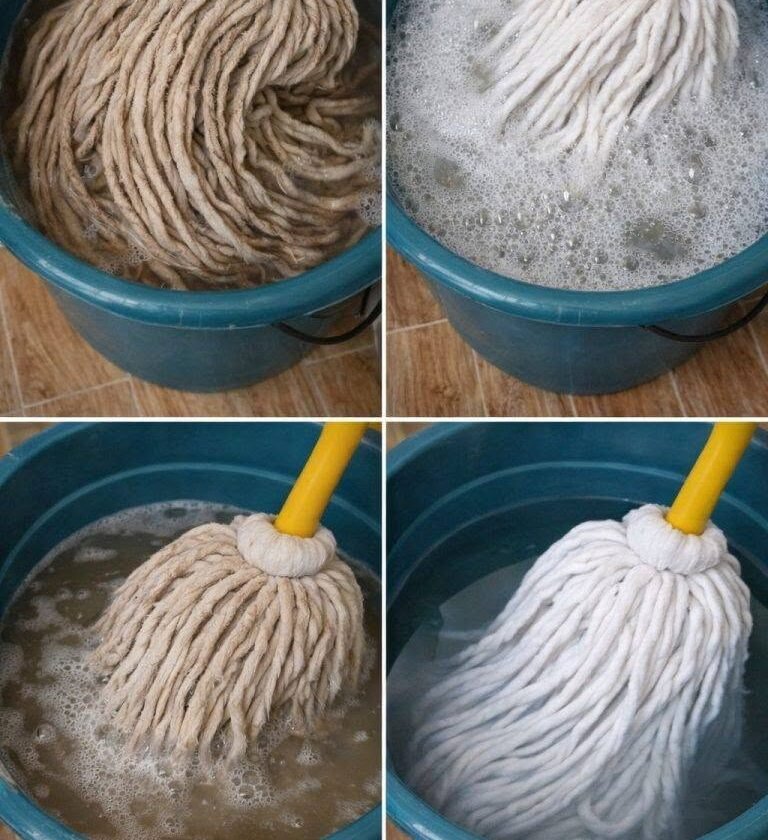
- Rinse the mop head thoroughly to remove loose dirt.
- Soak it in warm water with a little detergent for 10–15 minutes.
- Agitate or gently scrub the fibers to loosen embedded grime.
- Rinse repeatedly until the water runs clear and no soap remains.
- Hang it up and let it dry completely before using or storing it. (Dreame)
What about vinegar or bleach?
Don’t automatically use them. Check the mop manufacturer’s instructions first. In particular, chlorine bleach can damage microfiber mop heads; some manufacturers specifically advise against it. (CDC)
And never mix bleach with vinegar or other cleaning products, because dangerous fumes can be produced.
Bottom line: The real secret isn’t a magical drop—it’s thorough washing followed by complete drying. If the mop remains slimy, badly stained, damaged, or foul-smelling after cleaning, replacing the head may actually be more hygienic.