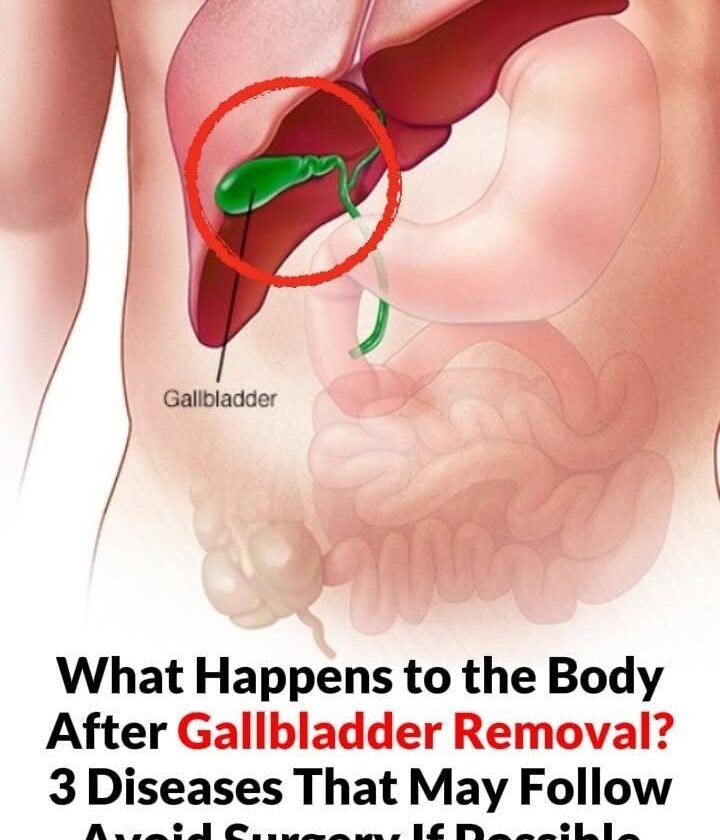
“What Happens to the Body After Gallbladder Removal? 3 Diseases That May Follow — Avoid Surgery If Possible”
This headline is misleading and potentially dangerous. Gallbladder removal (cholecystectomy) is a common procedure, and most people live normally without a gallbladder. The liver continues making bile; after surgery, bile flows directly into the small intestine instead of being stored in the gallbladder.
What can actually happen after surgery?
Some people experience:
- Diarrhea or softer, more frequent stools, usually temporarily
- Bloating or indigestion
- Abdominal discomfort, particularly after fatty meals
- Occasionally, persistent digestive symptoms known as post-cholecystectomy symptoms
Rare surgical complications include bile leakage, bile-duct injury, infection, bleeding, blood clots, or stones remaining in the bile ducts. These are complications of surgery—not “three diseases” that everyone develops afterward.
🟢 Should you avoid gallbladder surgery?
Not automatically. The important question is why surgery has been recommended.
People with silent gallstones that cause no symptoms often don’t need treatment. But symptomatic gallstones can cause repeated attacks and potentially serious complications such as gallbladder inflammation, bile-duct blockage, jaundice, or pancreatitis. Surgery is usually the standard treatment when gallstones are causing significant symptoms or complications.
There are nonsurgical treatments for selected patients who cannot undergo surgery, but they are used in specific circumstances and gallstones can recur.
🚨 Don’t postpone care because of this headline
If you have severe or persistent upper-abdominal pain, fever/chills, vomiting, yellow skin or eyes, dark urine, or pale stools, seek medical attention promptly. These can indicate a gallstone complication.
Bottom line: Gallbladder removal does change how bile reaches the intestine, and a minority of people have ongoing digestive symptoms. But there is no evidence that everyone develops three diseases after surgery, and avoiding medically necessary surgery can itself be risky