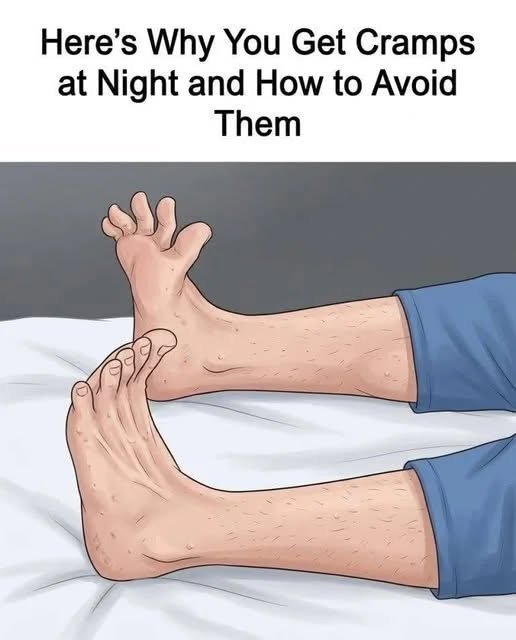
7 Common Causes of Nighttime Leg Cramps
-
Muscle fatigue and overuse: Long hours standing, walking on hard surfaces, or unaccustomed exercise overwork the calf muscles, making motor nerves more prone to spontaneous firing at night.
-
Shortened resting foot position: Sleeping on your stomach with toes pointed downward or heavy blankets pushing your feet into plantarflexion shortens the calf fibers and lowers their cramp threshold.
-
Dehydration or fluid shifts: Inadequate fluid intake during the day or shifts in body fluids while lying down can alter nerve and muscle excitability.
-
Electrolyte imbalances or low intake: Low levels of magnesium, potassium, or calcium—or heavy sweating—can disrupt normal muscle relaxation.
-
Age and physical inactivity: Cramping becomes more common with age as muscle mass declines and tendons lose elasticity, as well as during prolonged sitting.
-
Pregnancy: Extra weight, fluid shifts, and increased leg strain make nighttime calf cramps especially common in the second and third trimesters.
-
Medications and medical conditions: Diuretics, statins, certain asthma or blood pressure drugs, peripheral artery disease, nerve compression, kidney issues, or thyroid shifts can trigger or worsen cramps.
How to Stop a Cramp Fast & Prevent Them Naturally
In the Moment (When a Cramp Hits)
-
Stretch the muscle gently: Stand up and press the heel of the cramped leg firmly into the floor while leaning slightly forward, or sit with the leg extended and pull your toes gently toward your shin.
-
Massage and warm the area: Rub the tight calf or foot gently to ease tension, then apply a warm compress or heating pad—or take a brief warm shower—once the acute spasm starts letting go.
-
Walk it off lightly: Taking a few slow steps around the room helps restore normal muscle length and blood flow.
Daily Prevention Habits
-
Stretch before bedtime: Spend 2–3 minutes doing gentle calf and hamstring stretches before getting into bed.
-
Adjust bedding and sleep posture: Keep sheets or blankets loose at the foot of the bed so your toes are not forced downward, and try sleeping on your side or back with feet neutral.
-
Hydrate steadily and eat mineral-rich foods: Sip water consistently through the day rather than chugging right before sleep, and include magnesium- and potassium-rich foods such as leafy greens, legumes, seeds, bananas, and dairy.
-
Move regularly during the day: Break up long sitting or standing spells with short walks and ankle pumps.