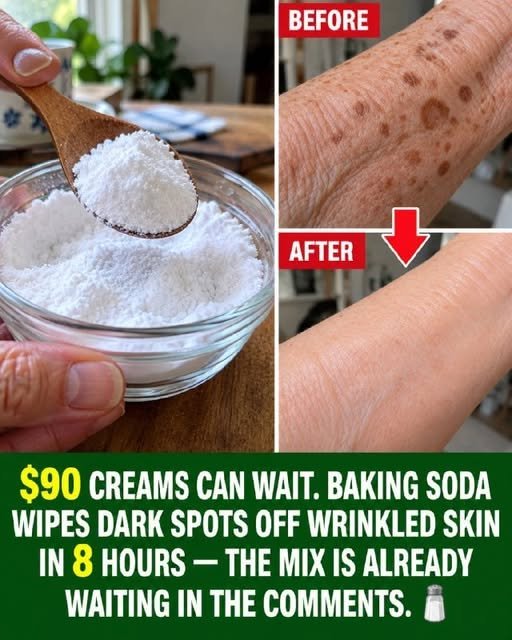
Why Baking Soda Damages Aging Skin Instead of Fixing It
| Skin Factor | What Healthy Skin Needs | What Baking Soda Does Overnight |
| 1. Skin Surface pH (Acid Mantle) | Slightly acidic pH 4.5–5.5 to keep barrier enzymes working and block irritation/bacteria. | Baking soda has an alkaline pH of ~8.3–9.0, which strips protective skin lipids, disrupts the acid mantle, and leaves mature skin dry, tight, and inflamed. |
| 2. Dark Spots (Hyperpigmentation / Age Spots) | Excess melanin sits deep inside the epidermis (and sometimes upper dermis), taking 6 to 12+ weeks of gradual cell turnover and pigment-blocking to fade. | Scrubbing or burning the surface with alkaline paste triggers skin inflammation—which stimulates melanocytes to produce even more pigment (post-inflammatory hyperpigmentation), darkening the exact spots you tried to fade. |
| 3. Wrinkled & Thinning Skin | Hydration, intact barrier lipids, daily UV protection, and gradual collagen remodeling over months. | Dehydrating the outer skin layer (stratum corneum) with baking soda makes fine lines and crepiness look deeper and rougher the next morning. |
What Actually Fades Dark Spots and Softens Wrinkles (Without $90 Luxury Creams)
-
Daily Broad-Spectrum Sunscreen (SPF 30–50) — Non-Negotiable:
-
Even 10 minutes of unprotected daylight reactivates melanin in dark spots and undoes every brightening ingredient. Plain, affordable broad-spectrum sunscreen is the single highest-impact step.
-
-
Gentle Pigment-Fading Ingredients (Expect 8–12 Weeks, Not 8 Hours):
-
Niacinamide (4–5%) or Azelaic Acid (10%): Calm inflammation, strengthen the skin barrier, and gradually fade uneven brown spots without harsh irritation—ideal for sensitive or mature skin.
-
Vitamin C (L-ascorbic acid or gentle derivatives): Helps brighten surface dullness and protect against UV-driven pigment.
-
-
Retinoids for Both Wrinkles & Spots:
-
Over-the-counter retinol or adapalene (or prescription tretinoin) speeds up skin cell turnover to lift pigmented cells and stimulates collagen production over 3 to 6 months. Start 2 nights a week over moisturizer to avoid dryness.
-
-
Plain Barrier Moisturizer:
-
Simple fragrance-free creams with ceramides, glycerin, or petrolatum plump fine dehydration lines safely—unlike baking soda, which belongs in the kitchen or cleaning cabinet, never on your face.
-