Most Common Causes of Small White Spots on Arms or Legs
| Condition | What It Looks & Feels Like | What Actually Causes It |
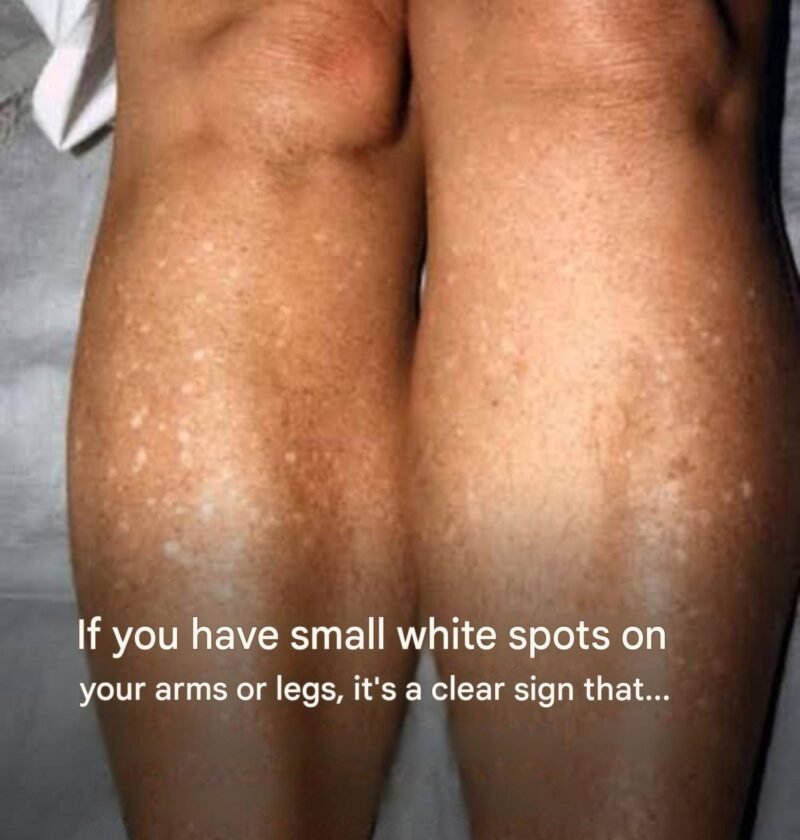
| 1. Idiopathic Guttate Hypomelanosis (IGH — Most Common in Adults 40+) | Multiple tiny, smooth, flat, sharply defined round/oval white dots (2–5 mm) on sun-exposed shins and forearms; no itching, scaling, or pain. | Cumulative UV sun exposure and natural skin aging causing localized drop-off in pigment cells (melanocytes). |
| 2. Tinea Versicolor (Superficial Yeast Overgrowth) | Lightly scaled or faintly powdery pale, pink, or tan patches that may merge together and look more obvious after tanning; occasionally mildly itchy in warm/humid weather. | Harmless overgrowth of normal skin yeast (Malassezia) that produces acids temporarily dimming skin pigment. |
| 3. Post-Inflammatory Hypopigmentation | Pale spots left behind after a bug bite, scratch, eczema flare, burn, or rash heals. | Temporary pigment slowdown while skin recovers from minor inflammation; color usually fades back to normal over months. |
| 4. Pityriasis Alba | Faintly scaly, pale oval patches with blurry edges, most common in children, teens, or people with dry/eczema-prone skin. | Mild, low-grade dryness and eczema-related inflammation—not a fungal infection or vitamin deficiency. |
| 5. Vitiligo (Less Common for Tiny Scattered Dots) | Chalk-white patches that gradually enlarge or merge, often symmetrical (both hands, wrists, knees, face, or around body openings) rather than staying tiny 2–3 mm dots on shins. | Autoimmune loss of melanocytes; requires dermatology evaluation for targeted topical or light therapies. |
What Clickbait Posts Get Wrong
-
“White spots mean low calcium, zinc, or vitamin D”: Flat white spots on arms or legs are not caused by dietary calcium or vitamin deficiencies—taking supplements will not erase existing spots.
-
“Apple cider vinegar, lemon juice, or essential oils restore pigment”: Applying harsh acids or undiluted oils irritates skin and can cause chemical burns or more uneven discoloration.
-
“IGH turns into vitiligo or skin cancer”: Idiopathic guttate hypomelanosis is strictly benign, does not turn into vitiligo, and is not cancerous—though its presence is a helpful reminder that your skin has had plenty of lifetime sun exposure.
Practical Skin Care & When to See a Dermatologist
-
Protect Surrounding Skin From UV: Daily broad-spectrum SPF 30+ sunscreen and long sleeves prevent new sun-induced spots and keep surrounding skin from tanning darker (which otherwise makes white dots stand out more).
-
Moisturize Dry Arms and Shins: Plain fragrance-free cream or lotion keeps the skin barrier healthy and reduces mild flaking if dryness or pityriasis alba is involved.
-
See a Doctor or Dermatologist If: Spots rapidly enlarge or merge into larger chalk-white patches, show fine surface scaling or itching (a doctor can confirm tinea versicolor and prescribe an antifungal wash/cream), or appear raised, pearly, bleeding, or crusty rather than flat and smooth.